

Broker Globale Piattaforma di Verifica Regolamentare
WikiFX
English
简体中文
繁體中文
English
Pусский
日本語
ภาษาไทย
Tiếng Việt
Bahasa Indonesia
Español
हिन्दी
Filippiiniläinen
Français
Deutsch
Português
Türkçe
한국어
العربية
FXTRADING Financial Focus (Asia-Pacific 03/25)EU and Australia Reach Trade Agreement
Sommario:Against a backdrop of increasing global instability, the European Union and Australia on Tuesday finally pushed forward a trade negotiation that had dragged on for nearly eight years to completion. Th
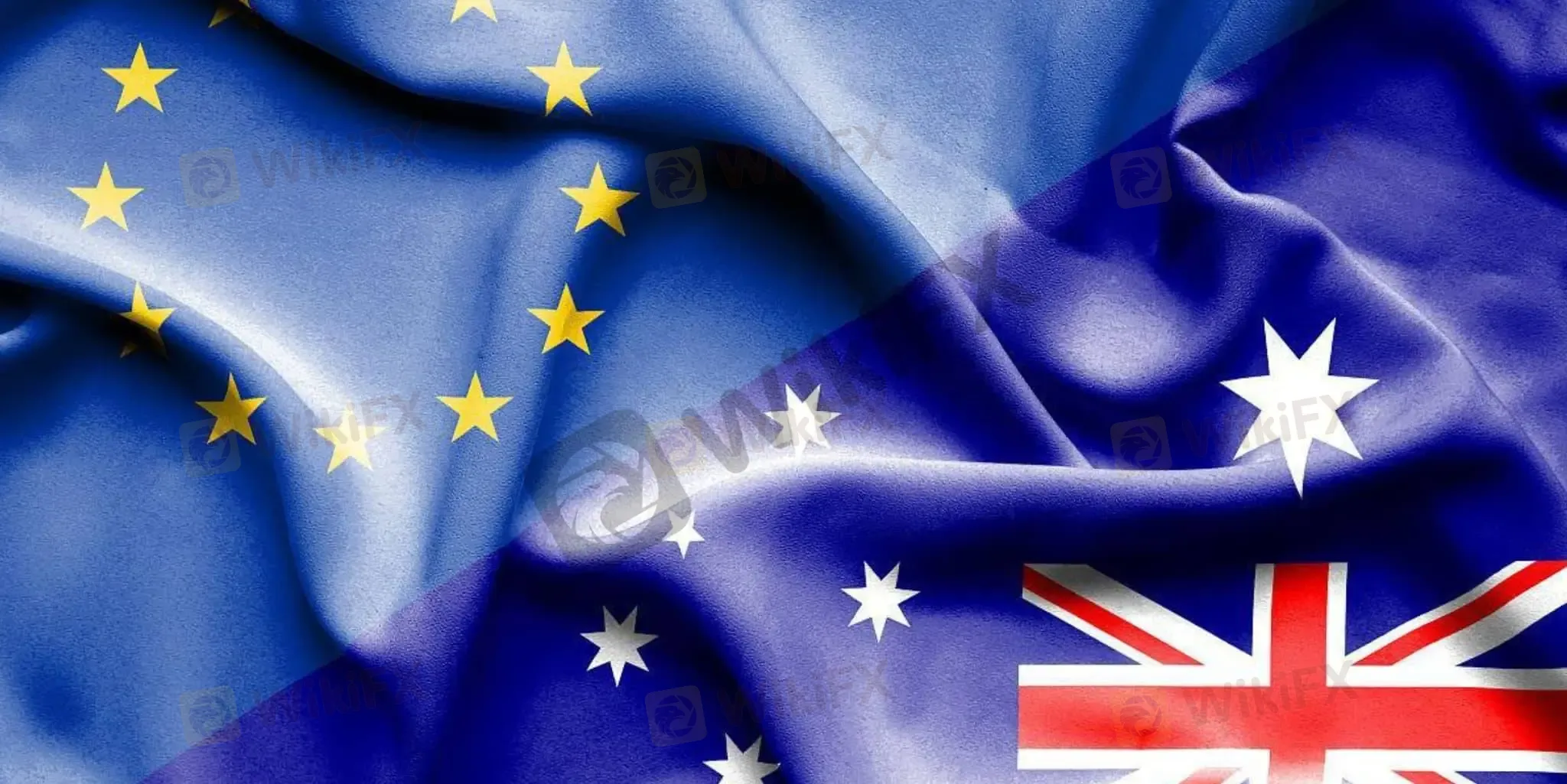
Against a backdrop of increasing global instability, the European Union and Australia on Tuesday finally pushed forward a trade negotiation that had dragged on for nearly eight years to completion. This development goes far beyond a simple tariff reduction; it is more of a restructuring of their relationship. Especially at a time when trust among traditional allies has shown signs of fluctuation, both sides have chosen to bind trade, security, and supply chains together. The direction is clear: to reduce reliance on any single system.
From the specifics of the arrangement, the EU will essentially eliminate tariffs on most Australian agricultural products, including wine, grains, dairy products, and seafood. In return, Australia will offer even broader access to EU goods, with industrial and manufacturing-related products almost fully liberalized. The structure of this exchange is quite straightforward—one side provides resources and agricultural goods, while the other offers manufacturing and high value-added products, creating strong complementarity.
On the resource front, the EU has in recent years been seeking stable sources of critical minerals such as lithium, manganese, and aluminum, all of which are essential for new energy and industrial systems. Previously, supply chains were overly concentrated, making them vulnerable to geopolitical risks. Bringing Australia into the core supply system effectively adds an extra layer of security, which also explains why the EU was willing to make concessions on agricultural quotas.
Looking back at the negotiation process, it was far from smooth. Talks stalled at one point in 2023, with key disagreements centered on agricultural access and resource entry, as neither side was willing to easily compromise. However, the situation later shifted. The continued escalation of U.S. tariff policies made many traditional trade relationships less stable, effectively pushing the EU and Australia to accelerate progress. In other words, this agreement is, to some extent, a result of external pressure.
From a medium- to long-term data perspective, there remains considerable room for growth in EU exports to Australia. Official estimates suggest that export volumes could increase by more than 30% over the next decade. At the same time, the EU already maintains a trade surplus with Australia, and this structure is likely to be further reinforced once the agreement takes effect. For Australia, attracting European capital is equally important. A significant expansion in investment would likely have a lasting impact on domestic industrial upgrading.
Beyond trade itself, the scope of cooperation has already expanded into broader areas. Both sides are advancing collaboration in maritime security, crisis response, and emerging technologies, particularly in fields such as artificial intelligence and defense. This indicates that the agreement is not only an economic alignment but also carries strategic considerations. Amid ongoing energy risks and repeated tensions in the Middle East, Europes demand for stable external partners is clearly rising.
Viewed within a broader framework, the EU has recently been accelerating its external agreement strategy—from India to Southeast Asia and further to South America. The underlying logic behind these moves is consistent: to diversify risk and rebuild its network. The previous model of relying on a single market is no longer considered secure; instead, the EU is effectively building a wider and more resilient network. From FXTRADING‘s perspective, the impact of such agreements will not be limited to trade alone. More likely, the effects will unfold in supply chain restructuring, capital flows, and industrial adjustments. As Europe’s sense of security over critical resources improves, it will likely influence investment trends and policy direction in related sectors, while Australia may gain greater leverage in resource pricing and external negotiations. This represents a slow-moving shift—one that may not be immediately visible, but will continue to shape the global economic landscape in the years ahead.
Disclaimer:
Le opinioni di questo articolo rappresentano solo le opinioni personali dell’autore e non costituiscono consulenza in materia di investimenti per questa piattaforma. La piattaforma non garantisce l’accuratezza, la completezza e la tempestività delle informazioni relative all’articolo, né è responsabile delle perdite causate dall’uso o dall’affidamento delle informazioni relative all’articolo.
WikiFX Trader
WikiFX Trader
Rate Calc
USD

CNY
Tasso di cambio attuale:0
inserisci l'importo
USD
A disposizione
CNY
Calcolare 