

Applicazione di richiesta di informazioni sulla regolamentazione dei broker globali
WikiFX
English
简体中文
繁體中文
English
Pусский
日本語
ภาษาไทย
Tiếng Việt
Bahasa Indonesia
Español
हिन्दी
Filippiiniläinen
Français
Deutsch
Português
Türkçe
한국어
العربية
FXTRADING Financial Focus (Asia-Pacific 03/13)South Korea Approves US Investment Plan
Sommario:The South Korean National Assembly has recently completed key legislation that establishes a legal framework for the government to undertake large-scale investments in strategic industries in the Unit
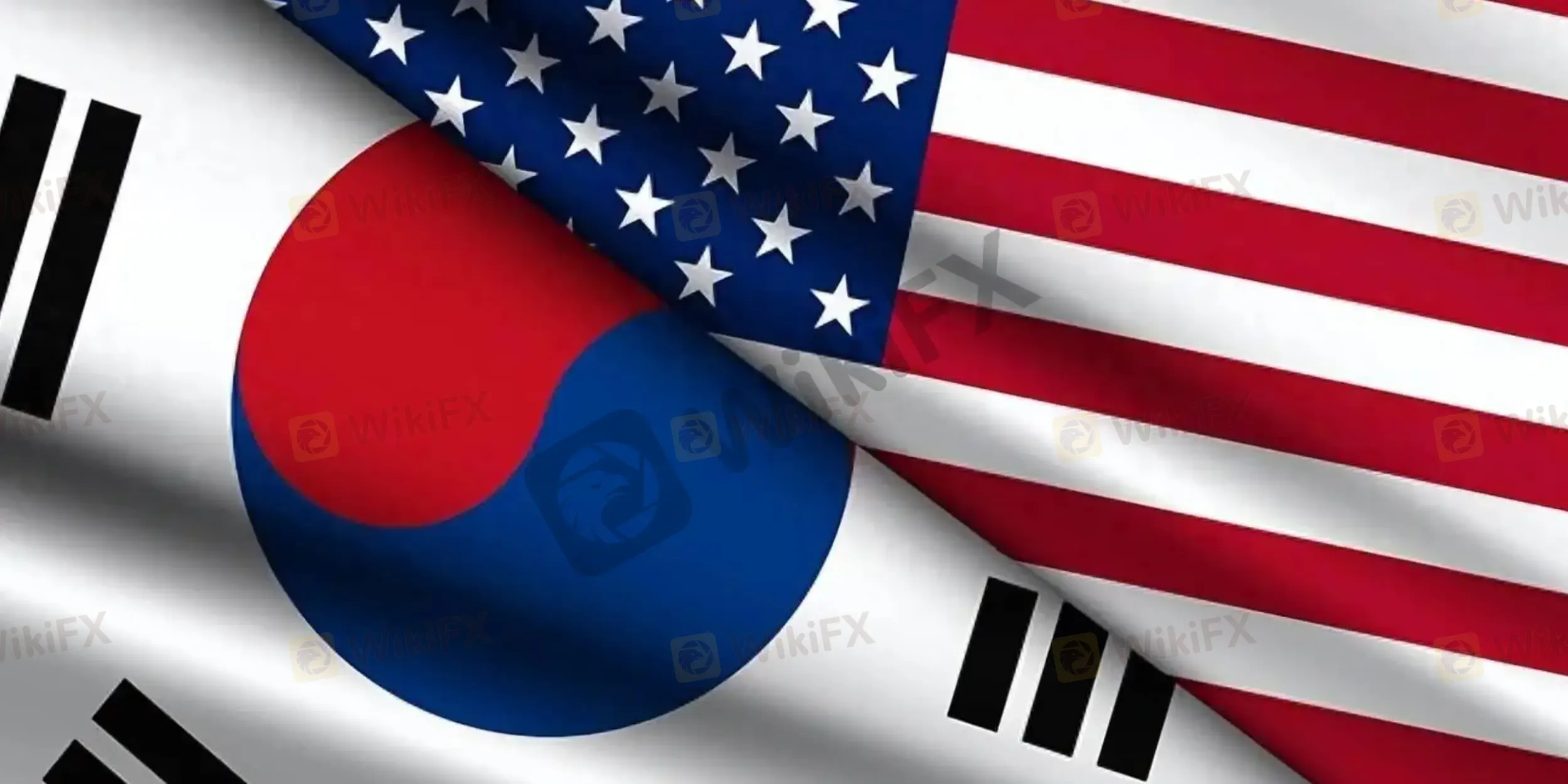
The South Korean National Assembly has recently completed key legislation that establishes a legal framework for the government to undertake large-scale investments in strategic industries in the United States. The bill was passed during a plenary parliamentary session on Thursday with support from major political parties. The main objective of the legislation is to implement South Koreas previously pledged industrial investments in the United States while also providing the institutional basis for creating new investment entities and funding arrangements. According to the plan, the law will formally take effect in approximately three months.
Under the provisions of the bill, the South Korean government plans to establish a state-backed investment company along with a strategic investment fund to promote industrial cooperation projects in the United States. The entity will begin with an initial registered capital of around 2 trillion won, equivalent to roughly 1.4 billion US dollars. Through this structure, the government hopes to concentrate resources in order to manage key industrial projects more systematically, while also providing companies with a more stable financing channel for participating in cross-border cooperation.
This legislation is closely tied to a trade agreement reached last November. Under that arrangement, South Korea committed to investing approximately 200 billion US dollars in strategic industries in the United States in the coming years, along with an additional 150 billion US dollars in investment in shipbuilding-related sectors. Through this investment framework, the South Korean government aims to strengthen industrial supply chain cooperation with the United States while also seeking more predictable treatment regarding tariffs and trade policy.
In terms of industrial priorities, the bill clearly identifies several sectors for investment. Shipbuilding is listed at the top of the priority list, followed by semiconductors, pharmaceuticals, critical minerals, energy, artificial intelligence, and quantum computing. The South Korean government believes these industries are closely tied to the future global competitive landscape and are also aligned with the United States ongoing efforts to restructure and secure its supply chains.
At the same time, although the US Supreme Court overturned most of the tariffs previously implemented by the Trump administration in February this year, South Korean officials believe that the trade cooperation arrangements reached last year will not be fundamentally affected. Within the South Korean government, there is a broad assessment that the United States still intends to maintain economic ties with its allies through industrial cooperation and supply chain integration.
However, the Office of the United States Trade Representative has already launched a Section 301 investigation targeting multiple economies, focusing on excess capacity in global manufacturing industries. South Korea has also been included in the scope of the investigation. South Korean officials view this move as largely expected. Minister of Trade, Industry and Energy Kim Jung-kwan stated during a parliamentary committee hearing that such investigations by the United States often serve as a precursor to broader trade policy adjustments.
South Korea‘s trade envoy revealed that the United States appears to be considering shortening the investigation timeline, with the process possibly concluding within four to five months. If that pace holds, new tariff arrangements could gradually become clearer after mid-July and may potentially return to policy levels seen before the US Supreme Court ruling. This would mean that South Korean companies may still need to find a new balance between investment cooperation and potential trade friction in the future. From the perspective of FXTRADING, this legislation reflects deeper structural changes underway in the global industrial landscape. Governments around the world are increasingly reshaping industrial security structures through capital investment, supply chain cooperation, and policy coordination. South Korea’s strategy of exchanging large-scale investment for trade stability essentially represents an effort to secure policy space in an uncertain international environment. In the period ahead, similar forms of industrial cooperation and policy maneuvering are likely to continue emerging, with long-term implications for the structure of global supply chains.
Disclaimer:
Le opinioni di questo articolo rappresentano solo le opinioni personali dell’autore e non costituiscono consulenza in materia di investimenti per questa piattaforma. La piattaforma non garantisce l’accuratezza, la completezza e la tempestività delle informazioni relative all’articolo, né è responsabile delle perdite causate dall’uso o dall’affidamento delle informazioni relative all’articolo.
WikiFX Trader
STARTRADER
Sotto supervisione
EBC FINANCIAL GROUP
Sotto supervisione
AVATRADE
Sotto supervisione
TICKMILL
Sotto supervisione
GO Markets
Sotto supervisione
TMGM
Sotto supervisione
STARTRADER
Sotto supervisione
EBC FINANCIAL GROUP
Sotto supervisione
AVATRADE
Sotto supervisione
TICKMILL
Sotto supervisione
GO Markets
Sotto supervisione
TMGM
Sotto supervisione
WikiFX Trader
STARTRADER
Sotto supervisione
EBC FINANCIAL GROUP
Sotto supervisione
AVATRADE
Sotto supervisione
TICKMILL
Sotto supervisione
GO Markets
Sotto supervisione
TMGM
Sotto supervisione
STARTRADER
Sotto supervisione
EBC FINANCIAL GROUP
Sotto supervisione
AVATRADE
Sotto supervisione
TICKMILL
Sotto supervisione
GO Markets
Sotto supervisione
TMGM
Sotto supervisione
Rate Calc
USD

CNY
Tasso di cambio attuale:0
inserisci l'importo
USD
A disposizione
CNY
Calcolare 