

Applicazione di richiesta di informazioni sulla regolamentazione dei broker globali
WikiFX
English
简体中文
繁體中文
English
Pусский
日本語
ภาษาไทย
Tiếng Việt
Bahasa Indonesia
Español
हिन्दी
Filippiiniläinen
Français
Deutsch
Português
Türkçe
한국어
العربية
Navigating Market Volatility: GTC FX Insights on Rising Geopolitical Tensions
Sommario:Global markets closed on a mixed note as escalating geopolitical tensions in the Middle East sent shockwaves through the energy sector. Crude oil prices witnessed a dramatic intraday surge of nearly 9
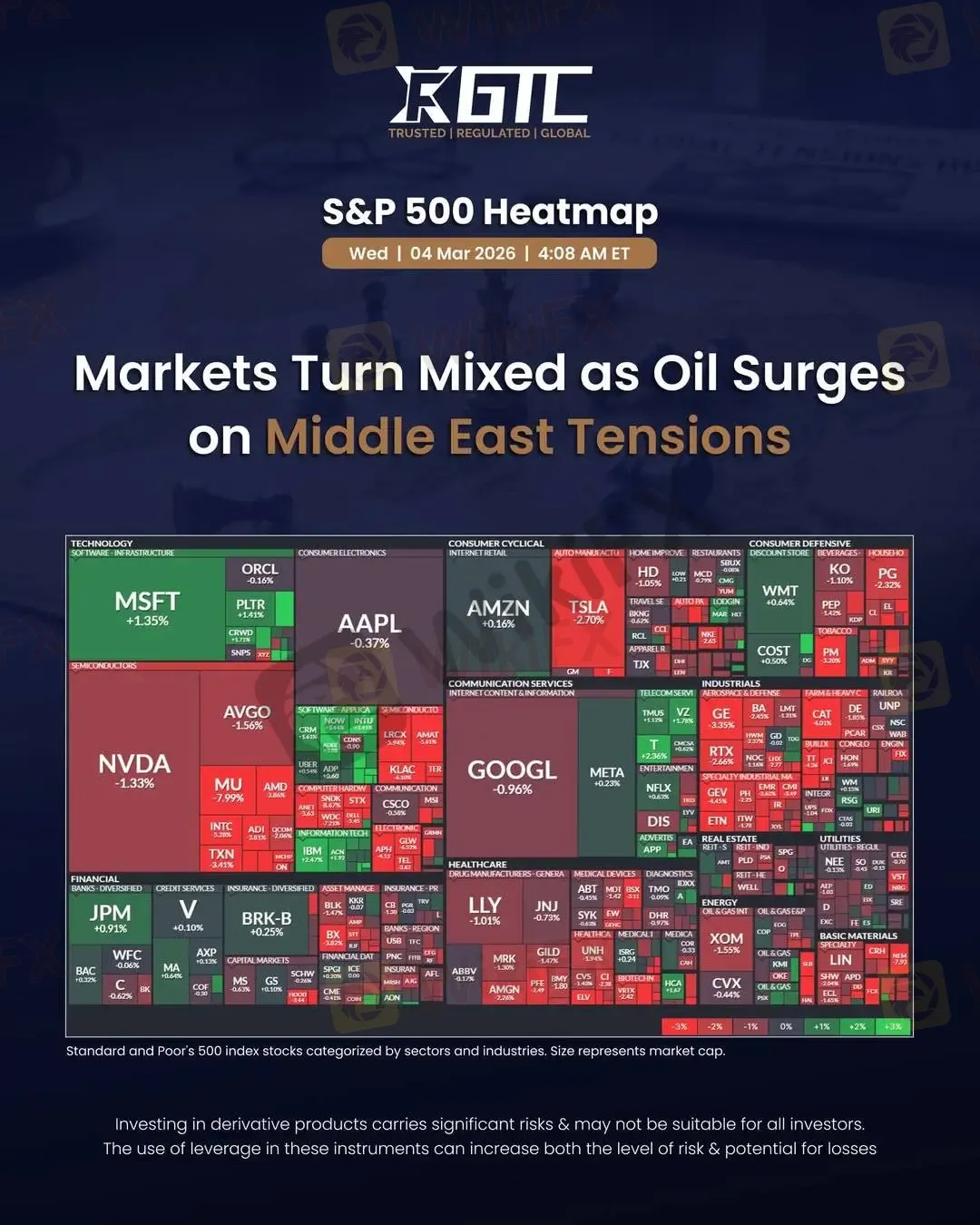
Global markets closed on a mixed note as escalating geopolitical tensions in the Middle East sent shockwaves through the energy sector. Crude oil prices witnessed a dramatic intraday surge of nearly 9%, marking a staggering 15% increase over the last four trading sessions. According to analysts at GTC FX, the primary driver of this volatility is the heightened conflict involving Iran, which has sparked serious concerns regarding potential disruptions in the Strait of Hormuz—a vital artery for global oil shipments.

While energy stocks and gasoline prices climbed, other commodities like gold and natural gas saw a decline, reflecting a complex shift in investor sentiment. This uncertainty weighed heavily on global equities; the S&P 500 exhibited fragmented performance as traders grappled with the implications of rising energy costs on inflation and corporate earnings.
At GTC FX, we recognize that such geopolitical instability often leads to rapid shifts in liquidity and price action. Market experts warn that if supply disruptions persist, energy prices could remain elevated in the near term, maintaining pressure on global indices. For traders and investors alike, staying informed through the GTC FX platform is essential for navigating this period of increased volatility across commodities and equities.
Disclaimer:
Le opinioni di questo articolo rappresentano solo le opinioni personali dell’autore e non costituiscono consulenza in materia di investimenti per questa piattaforma. La piattaforma non garantisce l’accuratezza, la completezza e la tempestività delle informazioni relative all’articolo, né è responsabile delle perdite causate dall’uso o dall’affidamento delle informazioni relative all’articolo.
WikiFX Trader
WikiFX Trader
Rate Calc
USD

CNY
Tasso di cambio attuale:0
inserisci l'importo
USD
A disposizione
CNY
Calcolare 