Abstract:Amid ongoing scrutiny over Chen Zhi’s Cambodian citizenship, a separate case involving alleged money-laundering figure Benjamin Moberg has raised fresh concerns. Reports that Moberg held a Cambodian diplomatic passport and advisory role despite links to criminal investigations have prompted questions about possible high-level protection and systemic misuse of citizenship and diplomatic status. Analysts warn the case may reflect deeper governance and enforcement challenges rather than isolated incidents.
The controversy surrounding Chen Zhis Cambodian citizenship has yet to subside, but a separate and even more sensitive case involving senior political figures is now drawing fresh attention.
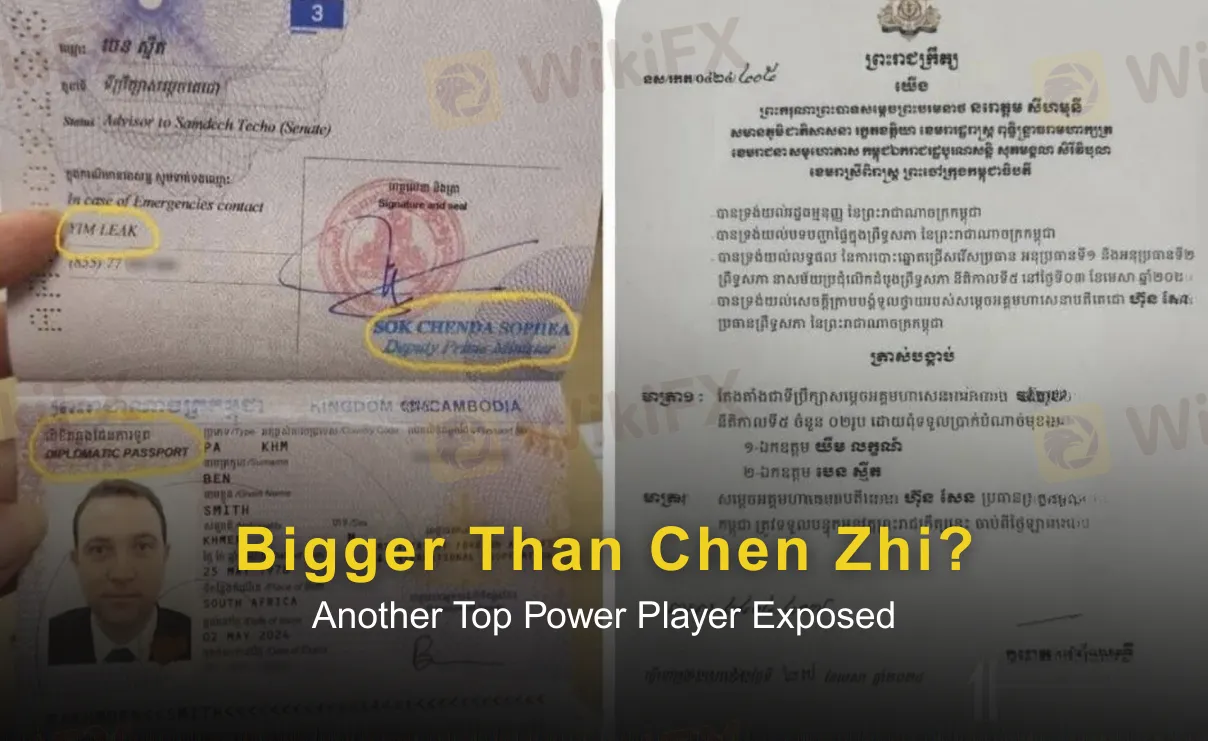
According to multiple reports and international observers, alleged global money-laundering figure Benjamin Moberg was found to be holding a Cambodian diplomatic passport and had reportedly been appointed as an advisor to former prime minister Hun Sen. For many analysts, this was not a coincidence but a troubling sign of possible collusion between political elites and organised financial crime, pointing to what critics describe as a system where status and protection may have been exchanged for capital.
Moberg, a South African national who reportedly operated under the alias “Ben Smith” while moving around Southeast Asia, had long been linked to money-laundering allegations. Yet despite this background, he was reportedly issued a Cambodian diplomatic passport in May 2024. Such passports are typically granted only under strict conditions, usually to nationals holding official public positions. Political analyst Sen Vanly has publicly questioned how Moberg, who allegedly held no formal government post and was linked to criminal probes, could have cleared these requirements without high-level approval.
Observers suggest this reflected a transactional arrangement: alleged illicit funds flowing into political networks, in return for diplomatic status that offered protection and mobility. If true, it would point to a deeply entrenched relationship rather than an isolated lapse.
Investigators believe Moberg‘s alleged money-laundering operations involved sums of up to US$1.5 billion, reportedly moving through networks connected to influential families in both Cambodia and Thailand. Under this alleged structure, Cambodia provided identity and diplomatic cover, while Thailand functioned as a financial transit hub. Although US authorities and Thailand’s Anti-Money Laundering Office have reportedly frozen related assets, Moberg is believed to be residing in Dubai, beyond immediate reach. Analysts note that diplomatic documentation can complicate international enforcement, slowing extradition and investigation efforts.
Moberg‘s name has also surfaced in Thailand’s political sphere. He reportedly applied for Thai citizenship but was rejected by then-interior minister and current caretaker prime minister Anutin Charnvirakul. After photos of the two surfaced, Anutin publicly distanced himself, saying Moberg was merely “a friend of a friend of a friend”. Critics argue that such explanations raise more questions than answers, noting that access to senior officials and confidence to apply for citizenship rarely comes without deeper connections. Some see this distancing as a cautious political move — neither fully exposing nor openly protecting the alleged network.
At the heart of the controversy is a broader concern: whether Cambodia has, intentionally or otherwise, allowed citizenship and diplomatic credentials to become tools within an informal protection system. Sen Vanly posed a pointed question that continues to resonate: if Chen Zhi‘s citizenship is now being scrutinised as irregular, how should Moberg’s diplomatic status be explained?
To critics, the pattern suggests more than individual misconduct. It hints at a system where political access, diplomatic privileges and legal protection may have been extended to questionable actors, creating a safe harbour for transnational crime. While Moberg remains abroad and no final court rulings have been made, analysts caution that both the Chen Zhi and Moberg cases may represent only a small part of a much larger and more complex web — one that remains shielded by power, influence and international loopholes.