

Global Broker Regulation Inquiry App
About WikiFX
English
简体中文
繁體中文
English
Pусский
日本語
ภาษาไทย
Tiếng Việt
Bahasa Indonesia
Español
हिन्दी
Filippiiniläinen
Français
Deutsch
Português
Türkçe
한국어
العربية
اردو



Selling USDT in Malaysia? This Law That Could Turn You into a Criminal Overnight

WikiFX
|


Abstract:Across Malaysia’s crypto trading community, a new kind of fear is spreading. It has little to do with price swings or market timing. Instead, traders are increasingly asking a more serious question: Is it still safe to cash out?
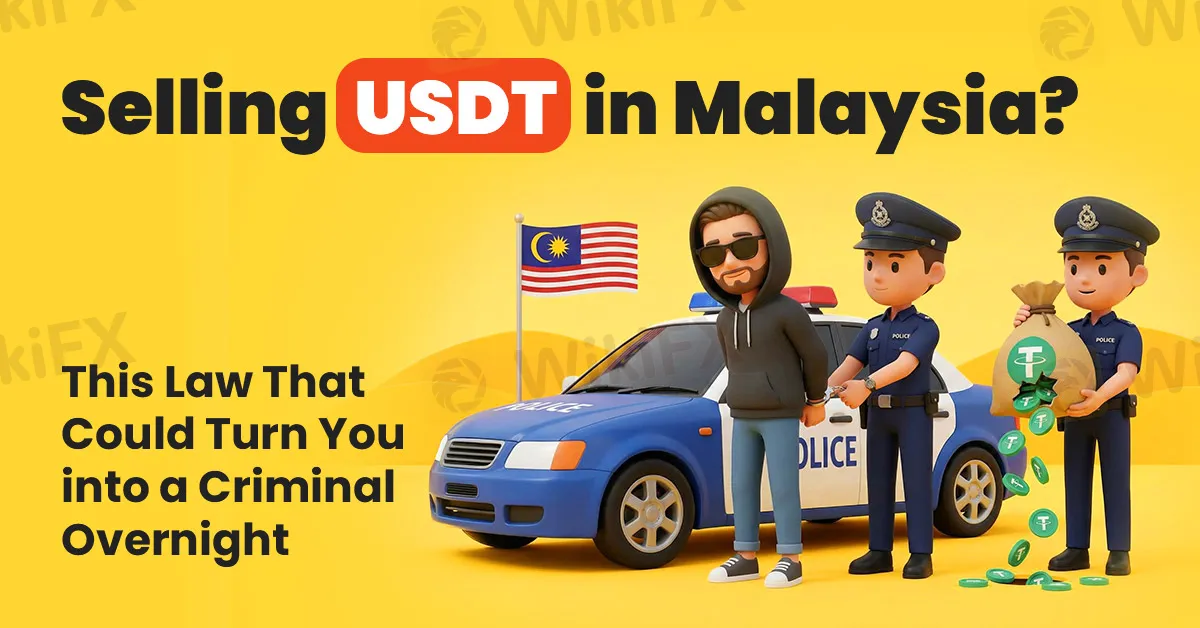
Across Malaysias crypto trading community, a new kind of fear is spreading. It has little to do with price swings or market timing. Instead, traders are increasingly asking a more serious question: Is it still safe to cash out?
Until recently, selling USDT was mostly about securing a favourable exchange rate. Today, it carries far heavier risks. Bank accounts are frozen without notice. Police investigations begin without warning. In some cases, traders find themselves cut off from the banking system entirely. Many still believe good intentions offer protection. They assume that trading normally or being unaware of the source of funds is enough. In 2024, that belief is no longer valid.
Malaysia has redrawn the legal boundaries, and peer-to-peer crypto traders now operate in a far more dangerous environment.
 Contents
Why your bank account becomes the first point of scrutiny
To understand the exposure, it helps to step away from crypto for a moment.
Imagine a criminal steals RM1,000 in cash. To avoid being caught, he walks into a phone shop and buys a second-hand iPhone. The shop owner accepts the cash in good faith and completes the sale. From the owners perspective, the transaction is legitimate.
From the authorities point of view, the stolen money has now entered the financial system through that shop. When investigators trace the funds, the trail ends with the shop owner.
Peer-to-peer crypto trading follows the same logic. The USDT you sell is equivalent to the phone. The bank transfer you receive may come from funds linked to scams, fraud, or organised crime. When a victim reports the crime, banks and law enforcement trace the money. Your account becomes the first place they look.
In this environment, intent matters far less than involvement.
The 2024 legal shift that changed everything
Before 2024, traders who unknowingly received illicit funds often had room to explain their situation. That margin has now narrowed dramatically.
In July 2024, Malaysia amended the Penal Code and the Criminal Procedure Code, introducing Sections 424A, 424B and 424C. These provisions are designed to dismantle mule account networks and suspicious transaction chains. In doing so, they place peer-to-peer crypto traders directly in the line of fire.
Section 424A targets individuals who hold or manage another persons bank account without a legitimate reason. This includes collecting or making payments on behalf of others. Penalties include fines ranging from RM5,000 to RM50,000, prison sentences of up to five years, or both.
Section 424B focuses on those who allow others to use their personal bank accounts. Whether done for convenience or small compensation, giving up control of an account is now treated as a serious criminal offence. Convictions can lead to fines of up to RM100,000 and prison sentences of up to seven years.
Section 424C is the most severe and the most misunderstood. Even when using your own account, you commit an offence if you cannot prove the transaction served a lawful purpose. In practice, this places peer-to-peer traders in a vulnerable position. Only platforms regulated by the Securities Commission, such as Luno or Hata, provide clear legal standing. Peer to peer activity on international platforms may be extremely difficult to justify in court.
Convictions under this section can result in prison sentences of up to ten years, alongside substantial fines.
Why frozen accounts rarely return to normal
Many traders assume a frozen account is temporary. In reality, it can mark the end of ones banking access in Malaysia.
When a scam victim contacts the National Scam Response Centre, authorities can instruct banks to freeze all related accounts immediately, without a court order. Because Malaysian banks operate on interconnected systems, being flagged as a mule account can affect every bank account under your name. Restrictions, forced closures, and permanent risk classifications often follow.
The long term consequences are severe. Individuals may be unable to open new bank accounts, apply for loans, obtain credit cards, or maintain a clean credit record.
The hidden dangers within peer-to-peer trading
Certain warning signs should never be ignored. Third party payments, where the senders name does not match the buyer, are among the most serious red flags. Offers well above market price often indicate an urgent attempt to move illicit funds. Newly created accounts or payment descriptions that reference crypto or investment can trigger immediate attention from banks.
In todays regulatory climate, ignoring these signals is no longer careless. It is potentially criminal.
What to do if your account is frozen
If your account is restricted, respond calmly and methodically. Contact your bank to confirm the reason and obtain the relevant police report number. Compile all transaction records, including order details, chat histories, and timestamps. Present these to the investigating officer.
If large sums are involved or Section 424C is mentioned, legal representation is essential. At that point, the issue has moved beyond administration into criminal liability.
How to stay safe in Malaysias crypto market
For Malaysian traders, survival now depends on discipline and restraint. Use regulated platforms for large withdrawals, even if exchange rates are less attractive. Insist on strict name matching for all transactions. Avoid large, sudden fund movements that may trigger anti money laundering systems. Keep detailed records of every transaction for at least two years.
Cryptocurrency was built on the promise of freedom. But in Malaysias intensified crackdown on financial crime, freedom without caution carries an unforgiving cost. One careless trade can undo years of effort and opportunity.

Disclaimer:
The views in this article only represent the author's personal views, and do not constitute investment advice on this platform. This platform does not guarantee the accuracy, completeness and timeliness of the information in the article, and will not be liable for any loss caused by the use of or reliance on the information in the article.
WikiFX Broker
Latest News
How Trading Costs Quietly Drain Your Account: Spreads, Swaps, and Pip Values
WikiFXWhy MetaTrader 4 Remains the Top Choice for Testing Automated Trading Robots
WikiFXeFishery Founder Jailed Nine Years as KWAP Defends RM163 Million Loss
WikiFXGFS Review 2026: Withdrawal Complaints, MT5 Access, and Regulation Gaps
WikiFXLOYAL PRIMUS Review: FSCA-Regulated Broker Faces Mounting Withdrawal Complaints
WikiFXDollar Firms as Geopolitics Pressures Asian Currencies
WikiFXKASPER CAPITAL MARKETS Review 2026: Regulation, Safety, and User Feedback
WikiFXThings About HTFX Broker That You Don't Know About
WikiFXWhy Most Retail Traders Fail: What the Numbers Reveal
WikiFX22K Trader Review 2026: Ongoing User Allegations Raise Fresh Questions About Trust
WikiFX