
ATFX Suspends Prop Trading Operations
ATFX has suspended operations at ATFunded, its prop trading unit, while reviewing the business model and promising refunds and pending payouts to eligible traders.
Original

简体中文
繁體中文
English
Pусский
日本語
ภาษาไทย
Tiếng Việt
Bahasa Indonesia
Español
हिन्दी
Filippiiniläinen
Français
Deutsch
Português
Türkçe
한국어
العربية
اردو

Abstract:If you’ve been on social media lately, you’ve seen the ads. Someone in a hoodie is showing off a dashboard with a $100,000 or even a $500,000 balance. They tell you that you don't need your own money to trade. You just need skill.
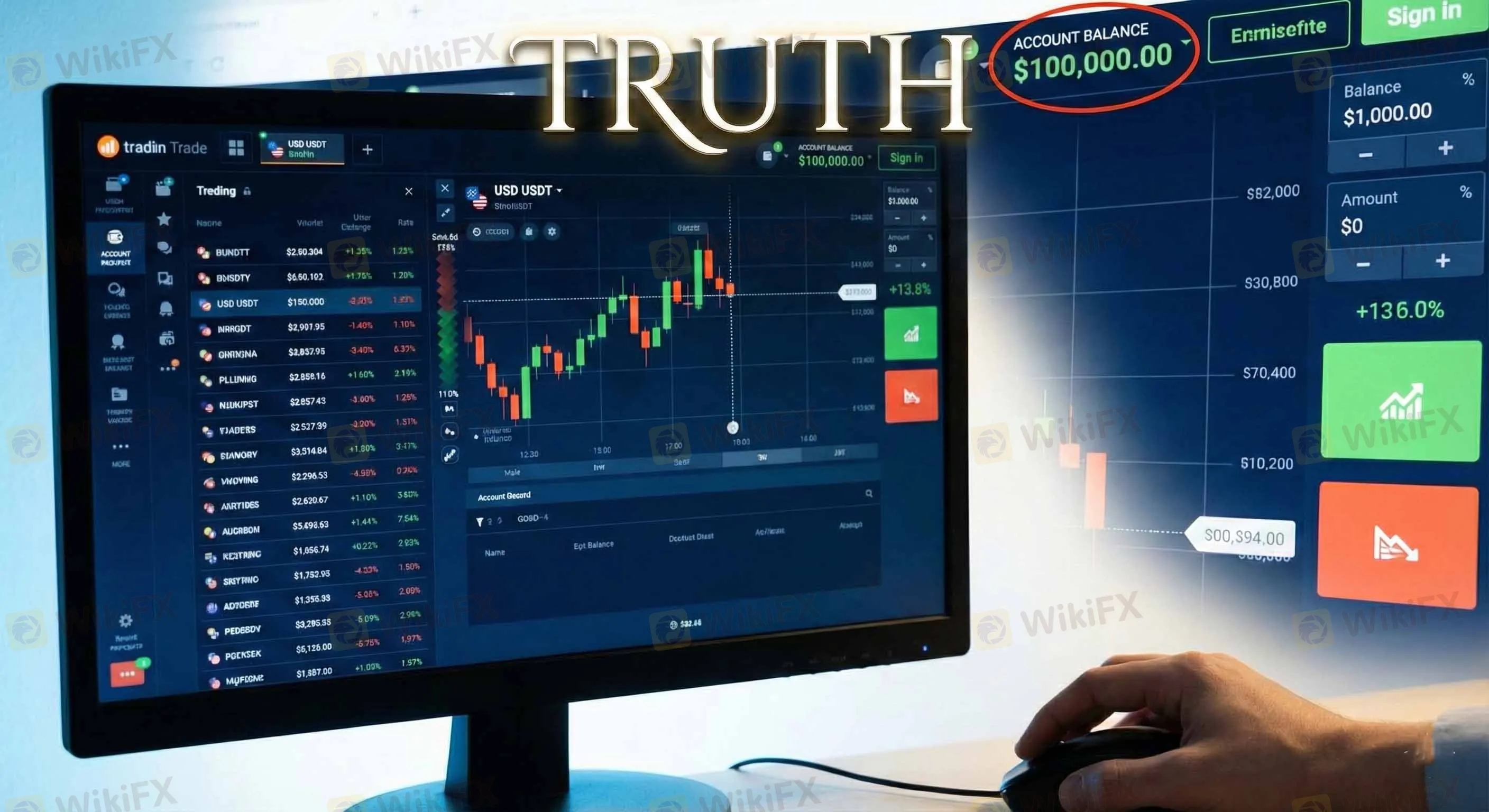
If you‘ve been on social media lately, you’ve seen the ads. Someone in a hoodie is showing off a dashboard with a $100,000 or even a $500,000 balance. They tell you that you don't need your own money to trade. You just need skill.
This is the world of Proprietary Trading (Prop Trading).
It is currently the hottest trend in the retail market. The promise is seductive: buy a “challenge” for a few hundred bucks, prove you can trade, and get handed the keys to a massive account. You keep 80% or 90% of the profits; they take the risk on the capital.
But if you‘ve been following me for a while, you know I don’t deal in fairy tales. I deal in risk management.
So, lets strip away the marketing hype. Is Prop Trading a golden ticket for the little guy, or is it a casino designed to take your evaluation fees? Here is the breakdown.
First, let‘s clear up a misconception. In the old days, prop trading meant you sat in a firm’s office in New York or London, got a salary, and traded the firm's capital.
That is not what we are seeing today.
Online Prop Firms are different. Here is the standard model:
Here is the secret most beginners miss: even when you are “funded,” you are often still trading on a demo server. The firm pays you out of the collected loss fees of other failing traders. Only the top 1% of traders get moved to real liquidity pools (A-Book).
Does this mean it's a scam? No. But it means the business model relies on most people failing.
This is the question I get in my inbox every single day.
The answer depends on you, not the firm.
The biggest trap in prop trading is the Daily Drawdown. Most firms have a rule that says if you lose 5% of your account in a single day, you lose the account.
Let's do the math. If you have a $100,000 account, but you lose it if you dip below $95,000, you don't truly have a $100,000 account. You have a $5,000 account with massive leverage.
If you don't understand that math, you will blow up. I see traders taking huge positions because they see “$100k” on the screen. Do not be fooled. Trade the drawdown limit, not the balance.
Because this industry is booming, sharks are swimming in the water. We have seen prop firms pop up overnight, collect thousands of evaluation fees, and then disappear when its time to pay out profits to successful traders.
Since these firms are not traditional brokers, they often operate in regulatory gray areas. They aren't holding your deposits (since you are technically paying a “service fee” for education/evaluation), so financial regulators stay quiet.
This is where you have to be your own bodyguard.
Check the underlying tech.
Does the prop firm execute trades properly? Do they use a reputable liquidity provider? Before you drop a dime on a challenge fee, check the reputation of the broker or data feed they are connected to. You can use the WikiFX app for this. Even though the prop firm itself might not be listed as a broker, the platform they force you to trade on likely is.
If WikiFX flags their partner broker as a clone, a scam, or unregulated, run away. If the data feed is manipulated to hunt your stop losses, you will never pass that challenge. Your edge means nothing if the game is rigged.
If you are going to try this, do it right. Here is Coach Ks playbook for surviving the evaluation phase:
1. Ignore the Timer (Mostly)
Many firms have removed the “30-day limit” to pass. Find a firm with no time limit. The pressure to hit 10% in a month forces you to over-trade bad setups. If you have unlimited time, you can wait for the perfect A+ setup.
2. Risk 0.5% Per Trade
Most novices risk 2% per trade. If you risk 2% and hit a losing streak (which happens to everyone), you will hit the drawdown limit in three or four bad trades. Drop your risk to 0.5%. It takes longer to pass, but it is much harder to fail.
3. Read the “Hidden” Rules
Some firms ban you for holding trades over the weekend. Others ban you for trading during major news events like CPI or NFP. Read the FAQ page three times. I have seen brilliant traders lose $5,000 in profits because they forgot to close a position on Friday afternoon.
Prop trading offers incredible leverage for traders who have skill but lack cash. It allows you to skip the years of saving up a deposit.
But remember: You are renting the capital, not owning it. The landlord can kick you out the moment you violate a rule.
Treat the evaluation fee as the cost of doing business, not a lottery ticket. vetting the firm is just as important as reading the chart. Use tools like WikiFX to ensure you aren't playing a rigged game, keep your position sizes small, and trade with discipline.
The market doesn't care if it's your money or a firm's money. It only respects risk management.
Stay safe out there.
Disclaimer: This article is for educational purposes only and does not constitute financial advice. Trading foreign exchange, CFDs, and proprietary firm challenges carries a high level of risk and may not be suitable for all investors. Always do your own research before purchasing any evaluation course.
Disclaimer:
The views in this article only represent the author's personal views, and do not constitute investment advice on this platform. This platform does not guarantee the accuracy, completeness and timeliness of the information in the article, and will not be liable for any loss caused by the use of or reliance on the information in the article.
ATFX has suspended operations at ATFunded, its prop trading unit, while reviewing the business model and promising refunds and pending payouts to eligible traders.
Prop firms are attracting more forex traders by offering access to larger trading accounts, but the model also brings stricter rules on drawdown, execution, and discipline.
MyForexFunds has started contacting users with pending payouts after frozen client assets were released, marking the firm’s first concrete step toward returning funds since its 2023 shutdown.
Did you fail to receive payouts from KUBERA MARKETS despite successfully passing the trading challenge? Failed to log in to the trading account despite passing both the evaluation and funded phase? Were you surprised by the sudden nominal fee norm to receive a funded account? Did you have to go through a long withdrawal process? We have investigated these user claims while preparing this KUBERA MARKETS review article. Keep reading!
 WikiFXWikiFXWikiFXWikiFXWikiFXWikiFXWikiFXWikiFXWikiFXWikiFX
