Abstract:The Bank of Japan (BOJ) headquarters, center, at night in Tokyo, Japan, on Friday, March 18, 2022. The BOJ Governor Haruhiko Kuroda said Japan's annual inflation could accelerate to around 2% from April onwards
Japans giant investors look set to bet on yen weakness continuing and boost their purchases of Treasuries over the rest of the year.
Thats the view of money managers in Tokyo, who see conservative buyers like life insurers helping the country reaffirm its position as the biggest foreign holder of Treasuries after heavy selling in recent months. While yields on Japanese government bonds have climbed -- to six-year highs -- the premium offered by their U.S. counterparts has surged even more as monetary policy in the two economies diverges.
That divergence is seen by some as keeping the yen under pressure as the Federal Reserve raises interest rates. Already at a 20-year low, that will make dollar-denominated assets attractive to Japanese investors.
“At the moment taking currency risks is the surest way to generate returns on already lucrative yields,” said Tatsuya Higuchi, executive chief fund manager at Mitsubishi UFJ Kokusai Asset Management Co.
Japanese life insurers alone have total assets of more than $3 trillion, with buying and selling big enough to move Treasury yields at the margin, so their annual investment plans this month will be closely-watched. Alongside other holders of Treasuries they have been burned this year, with a Bloomberg gauge of the securities down around 8%, on track for its worst decline since at least 1974.
But the rise in Treasury yields is likely to have hit attractive levels for Japanese purchasers. The 10-year yield climbed above 2.8% this month on expectations for aggressive rate hikes, while the Bank of Japan has conducted unlimited bond-purchase operations to prevent the same maturity yield in its market breaching 0.25%.
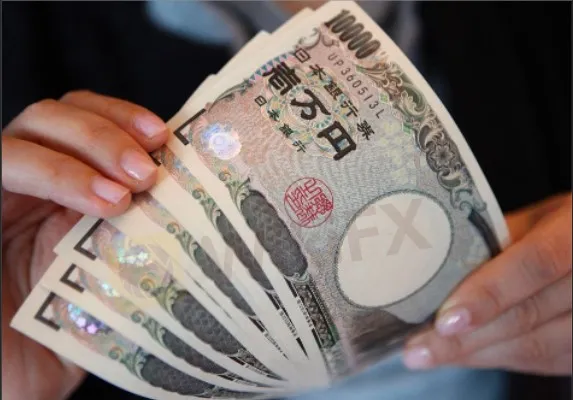
Currency Call
A key focus for lifers is the yen, which has slumped to the lowest since 2002 amid the yield divergence and Japans position as an energy importer at a time of rising oil prices. Cautious guidelines may see many of the insurers stick with currency hedging -- an important part of their investment decisions -- but others are less constrained.
Consensus is building among Tokyo market watchers that the yen can extend losses to the 130 per dollar level in coming months, before it steadies -- a bet that interest rate divergence will outweigh efforts from government officials to pare back the currencys slide.
Yen‘s Twenty-Year Low Just the Start for Tokyo’s Traders
With the view in the market that currency hedging costs will rise as the year goes on, there is a case for Japanese to switch to net buying of Treasuries soon, according to Hiroshi Yokotani, managing director at State Street Global Advisors in Tokyo.
“Over the past few years Japanese buyers got the timing wrong with U.S. yields falling while they waited for a rebound,” he said. “They may front-load buying since yields are already high at the start of the fiscal year.”
‘Diversification’
Still, the volatility in Treasuries and cost to hedge may see Japanese investors favor European government bonds, higher-yielding mortgages and U.S. credit, according to George Goncalves, head of U.S. macro strategy at MUFG Securities Americas Inc. in New York.
Eiichiro Miura, general manager of the fixed-income department at Nissay Asset Management Corp. in Tokyo, echoed this view.
“Diversification is a good choice, by investing in Europe where hedge costs are lower, in Australia where the rate-hike pace is slow, or U.S. credits where spreads remain attractive,” he said. “Or investors can raise the weighing slightly in unhedged Treasuries.”
Reassuring Investment
Japanese investors currently get a yield of almost 1.6% from a 10-year Treasury notes, after taking account of hedging costs. Returns on the Japanese equivalent are a small fraction of this while even the local 30-year yield is below 1%.
Higuchi at Mitsubishi UFJ Kokusai expects Fed rate hikes to fuel more volatility in shorter maturity U.S. bonds and flatten the yield curve, making longer-dated Treasuries a “reassuring” investment for Japanese buyers.
Meanwhile, Asset Management One Co. has been long in 10-year Treasuries and expects the bond market to benefit as stocks struggle when the Fed shrinks its balance sheet.
“There is more to gain than lose in Treasuries,” said Akira Takei, the global fixed-income money manager of the Tokyo-based firm, which oversees about $520 billion of assets.