Abstract:Japanese yen and U.S. dollar banknotes are arranged for a photograph in Tokyo, Japan on Sunday April 14, 2019. U.S. Treasury Secretary Steven Mnuchin said he wanted a currency clause in a trade deal with Japan to prevent deliberate manipulation of the yen to bolster exports, Japanese public broadcaster NHK said.
The yens recent wild swings against the dollar may be coming to an end, according to pricing signals from the option and rates markets.
The currency pairs three-month implied volatility -- a gauge of future movement factoring in recent price moves and upcoming event risks -- has dropped from a two-year high. Meanwhile, expectations for Federal Reserve rate hikes may have peaked out.
As the Fed first hiked in March and then signaled a more aggressive pace of increases, traders seized on dollar-yen as the best way to trade the sharp policy divergence with the Bank of Japan, which doubled down on its easing. In just three weeks, the dollar surged more than 9% against the Japanese currency.
That trade may now be over-extended, according to Jane Foley, head of FX strategy at Rabobank in London. Investors have already priced in over two hundred basis points of further Fed tightening this year.
“It is difficult to imagine a scenario in which the Fed will be hiking more than is currently already priced in, which suggests scope for some dollar-yen profit-taking in the weeks ahead,” said Foley.
The dollar touched 125.09 against the yen on March 28, the highest level since 2015. It has since dropped 2% from that level to around 122 yen on April 1.
The yens downside could be limited. Unless Federal Reserve pricing is greatly unwound, the two-year yield spread between Treasuries and Japanese sovereign bonds is unlikely to narrow much. “It is likely that volatility eases into Q2 as interest rate markets calm,” said Mitul Kotecha, chief EM and Europe strategist at TD Securities in Singapore.
Japan‘s central bank has insisted it will stand its ground with rock-bottom rates because the country’s underlying inflation remains anemic -- in sharp contrast with the U.S., where the Fed is now rushing to contain the biggest consumer-price increases in four decades. To show its commitment, the BOJ last week unleashed special bond-buying operations, before announcing on Thursday that it will also buy more debt through the second quarter.
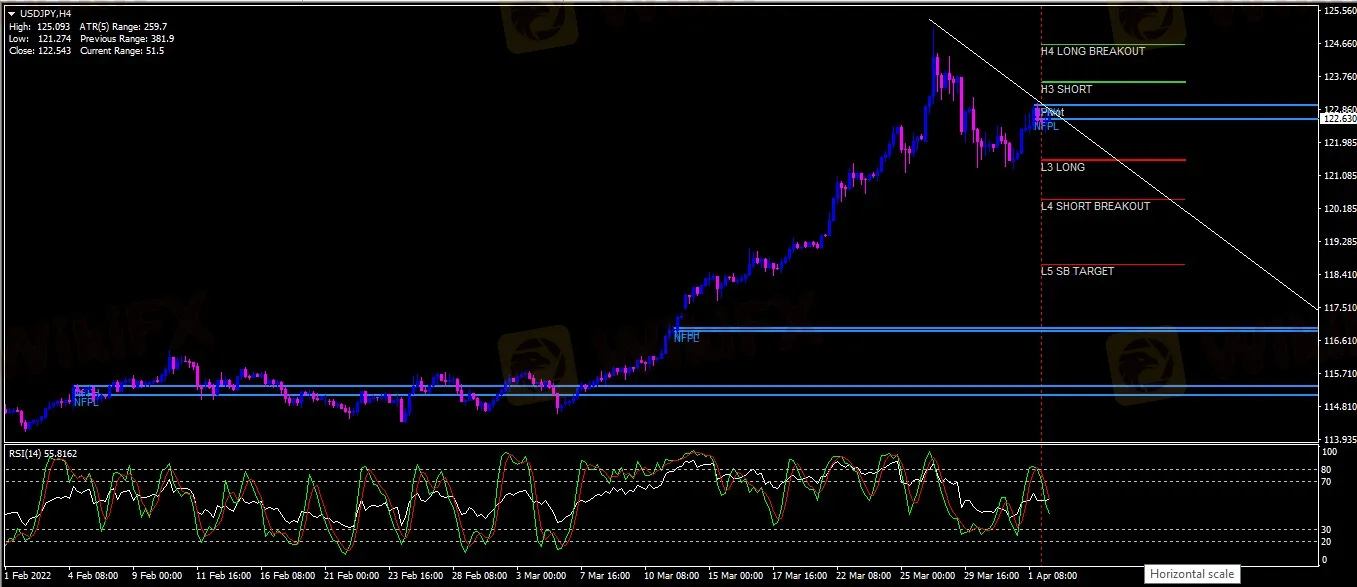
Still, swings in dollar-yen in the second quarter could be limited by technical resistance around 125.86, its 2015 high. “The 125 level in dollar-yen will likely provide formidable technical resistance, given the verbal intervention from Japan‘s finance ministry,” said David Forrester, foreign exchange strategist at Credit Agricole in Hong Kong, adding that this would weigh on the pair’s implied volatility.
Given the above reasons, the dollar-yen pair may be due a period of consolidation this quarter. If its three-month implied volatility pushes lower, the option market will certainly be signaling so.
Here are the key Asian economic data due this week:
Monday, April 4: India manufacturing PMI
Tuesday, April 5: RBA policy decision, South Korea CPI, Japan labor cash earnings and household spending, Philippines CPI, Singapore retail sales, Thailand CPI
Wednesday, April 6: China Caixin services PMI
Thursday, April 7: Australia trade balance
Friday, April 8: RBI policy decision, RBA financial stability review, South Korea BoP current account balance, Japan BoP current account balance, Taiwan trade balance and CPI, Philippine trade data