Abstract:The yen slid to a new five-year low on Monday, ahead of a bumper week of central bank meetings around the world which will almost certainly reaffirm the Bank of Japans position as one of the last dovish central banks standing.
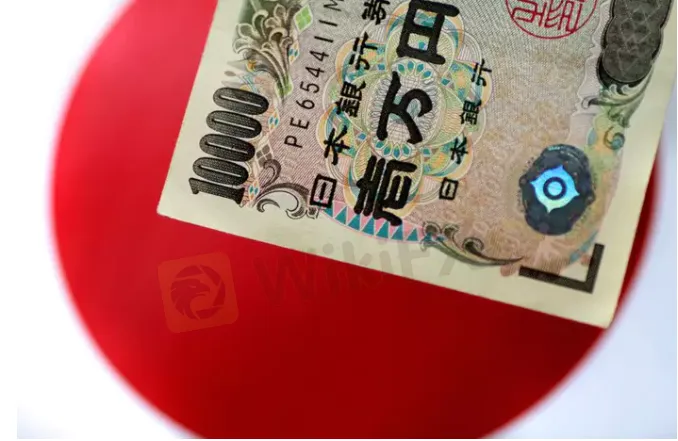
The dollar slipped as European markets opened on Monday, but was still near a five-year high versus Japans yen as investors braced for a busy week of major central bank meetings.
After uncertainty about the war in Ukraine prompted a market sell-off on Friday, stock markets rebounded on Monday and commodity prices edged back down.
Analysts attributed the revival of risk appetite to the fact that Russian and Ukrainian negotiators hinted at progress in peace talks.
Currency markets were also driven by expectation that the U.S. Federal Reserve will raise rates at its meeting this week, which ends on Wednesday.
Investors were pricing in 93% chance of a 25 basis point hike.
Federal Reserve Chairman Jerome Powell last week flagged multiple interest rate increases this year.
The dollar index rose during Asian trading, coming close to a 22-month high as the rate-sensitive short term U.S. Treasury yields rose, but it then edged lower as European markets opened.
At 0857 GMT, the dollar index was down 0.1% on the day at 98.886.
“We know at this point the Fed is hyper focused on inflation so we expect Powell will continue to weigh that challenge over the conflict in the Ukraine,” said Adam Cole, chief currency strategist at RBC, in a note to clients.
The U.S. dollar hit a five-year high against the Japanese yen overnight, at 117.88, as investors bet that the Bank of Japan, which meets on Friday, would maintain its dovish stance despite rising inflationary pressures.
“USD/JPY continues to press higher driven by both higher US yields and the fallout of the fossil fuel surge on Japans trade balance,” wrote ING FX strategists in a note to clients.
At 0900 GMT, the pair had eased to 117.775.
The British pound was still near a 16-month low, flat on the day at $1.30415, ahead of the Bank of England meeting on Thursday.
The euro was up 0.5% at $1.0953.
The Australian dollar was down 0.6%, hurt by the easing of commodity prices, while the New Zealand dollar was down 0.2%.
Lockdown measures to limit the spread of COVID-19 in China saw the yuan weaken.
The dollar hit 6.382 versus the offshore yuan, the yuans weakest in more than a month.
China has reported more local symptomatic COVID-19 cases so far this year than it recorded in all of 2021, as the highly transmissible Omicron variant triggers outbreaks from Shanghai to Shenzhen.
“The Chinese yuan has started to feel the weakening pressure due to continuous bad news for the economy,” wrote Commerzbank senior economist Hao Zhou in a client note.
“China is also facing intensifying pressure from the West to clarify its stance on the Ukraine war.”