

Global Broker Regulation Inquiry App
About WikiFX
English
简体中文
繁體中文
English
Pусский
日本語
ภาษาไทย
Tiếng Việt
Bahasa Indonesia
Español
हिन्दी
Filippiiniläinen
Français
Deutsch
Português
Türkçe
한국어
العربية
اردو


Rupee Ends Flat at 95.68, Caught Between RBI and Oil

WikiFX
|


Abstract:The Indian rupee closed nearly flat at 95.68 per U.S. dollar on July 30, 2026, wedged between volatile crude oil prices triggered by US-Iran tensions and sustained dollar-selling intervention by the Reserve Bank of India. The rupee had neared its record low of 96.96 the previous week before the central bank stepped in aggressively.
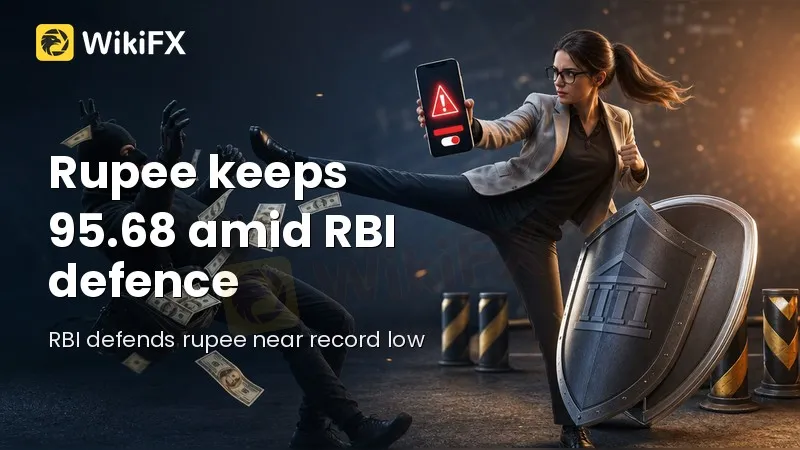
The Indian rupee closed nearly unchanged at 95.68 per U.S. dollar on Thursday, trapped between volatile crude oil prices driven by renewed US-Iran hostilities and sustained dollar-selling intervention by the Reserve Bank of India.
The flat close, barely moved from the previous session's 95.6475, masked a turbulent trading day. Separate data showed the USD/INR rate at 95.8760, up 0.15%. Brent crude futures swung between $93 and $89 a barrel, while state-run banks sold dollars near the rupee's intraday low of 95.75, a move traders interpreted as the RBI preventing a slide toward the currency's record low.
 Contents
Oil Swings Keep Importers on Edge
Brent crude's gyrations were triggered by renewed attacks between the United States and Iran, stoking fears over oil flows through key shipping routes. India imports nearly 90% of its crude requirements, making it one of the world's most vulnerable economies to a Middle East oil shock.
Elevated volatility has changed importer behaviour. Traders reported a pickup in hedging in recent sessions, adding downward pressure on the rupee as companies rush to lock in dollar purchases.
The RBI's Heavy Hand
The central bank's presence has become increasingly visible. The rupee tumbled past 96 per dollar last week and neared its record low of 96.96 before the RBI intervened aggressively.
That intervention was not a one-off. By Friday, July 31, the rupee extended its winning streak to a fifth consecutive session, strengthening to around 95.3 per dollar, a three-week high. Traders pointed to continued dollar sales by the central bank, which helped the currency capitalise on a weakening greenback and retreating crude prices. Brent crude slipped about 1% to around $88 a barrel amid expectations of a Saudi-led maritime coalition strengthening Red Sea security.
Global Crosswinds: The Fed and Treasury Yields
The rupee's fortunes are also shaped by events beyond Mumbai. The U.S. Federal Reserve kept rates on hold, but Chair Kevin Warsh offered mixed messages on the outlook for monetary policy and inflation. The uncertainty sent the 30-year Treasury bond yield to a 19-year high of 5.239% on Thursday, reinforcing the dollar's appeal against emerging-market currencies. The dollar index held steady at 100.8 while most Asian currencies slipped.
A Fragile Calm
Amit Pabari, managing director at FX advisory firm CR Forex, cautioned that the rupee's recent strength rests on fragile foundations. “The broader backdrop of elevated crude oil prices, persistent geopolitical tensions, and a Fed that continues to keep the door open for further tightening remains supportive for the dollar,” he said.
Over the 12 months to July 30, the Indian rupee weakened by 9.59%. Its all-time high of 99.82 per dollar, reached in March 2026, remains a psychological marker traders and policymakers want to avoid. For now, the RBI is holding the line, but the calm depends on oil not flaring again.
Disclaimer:
The views in this article only represent the author's personal views, and do not constitute investment advice on this platform. This platform does not guarantee the accuracy, completeness and timeliness of the information in the article, and will not be liable for any loss caused by the use of or reliance on the information in the article.
WikiFX Broker
Latest News
OtetMarkets Review: Traders Report Frozen Funds and Withdrawal Blocks , Score Sits at 2.00
WikiFXIs Octa Safe for Malaysian Traders? Deep Dive into Octa's Regulatory Status
WikiFXPocket Broker Review: Is Your Deposit Safe?
WikiFXReview 2026: Dollars Markets Regulation, Withdrawal Complaints, and Platform Risks
WikiFXCapital Guard Liquidated: $17.4m Raised, Most Funds Gone
WikiFXSingapore Dollar Holds Tight Range as FOMC Looms
WikiFXHow a 'Legitimate' Investment Became a RM67.5 Million Ponzi Scheme That Scammed 206 Investors
WikiFXRupee Hits Two-Week High as RBI Defends 97 Mark
WikiFXForexMart Review: Profit Canceled, Principal Withheld, and a Broker Warning Traders Cannot Ignore
WikiFXTitan Capital Markets Review 2026: Complaints, Withdrawals, and Severe Risk Signals
WikiFX