

Global Broker Regulation Inquiry App
About WikiFX
English
简体中文
繁體中文
English
Pусский
日本語
ภาษาไทย
Tiếng Việt
Bahasa Indonesia
Español
हिन्दी
Filippiiniläinen
Français
Deutsch
Português
Türkçe
한국어
العربية
اردو



New U.S. Tariff Policy Looms as Middle East Conflict Escalates


Abstract:[Graphic 1: Illustration of President Trump]U.S. Trade Representative Jamieson Greer signaled that the United States is expected to unveil a new tariff framework soon, replacing the temporary 10% univ
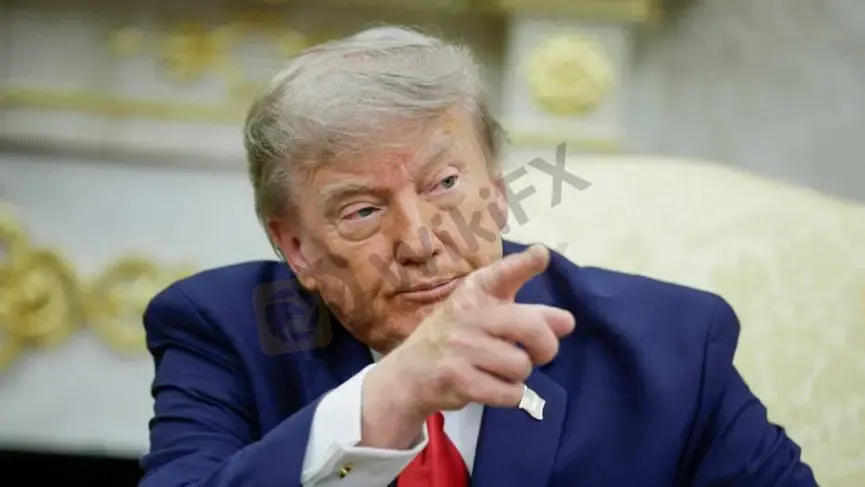
U.S. Trade Representative Jamieson Greer signaled that the United States is expected to unveil a new tariff framework soon, replacing the temporary 10% universal import tariff set to expire. Meanwhile, on July 20, the U.S. introduced new measures under Section 232 of the Trade Expansion Act of 1962, reducing import tariffs on aluminum to approximately 25% for companies investing in domestic primary aluminum production, down from the current 50% rate. The policy aims to address insufficient domestic production capacity. Despite the existing 50% steel and aluminum tariffs, the U.S. remains heavily dependent on imports, while elevated aluminum prices have continued to increase costs for manufacturers.
Canadian Prime Minister Mark Carney confirmed that he recently spoke with President Trump, with both leaders agreeing to accelerate trade negotiations over the coming weeks. However, Ontario Premier Doug Ford stated that the province will not lift its ban on U.S. wine and spirits unless Washington removes sector-specific tariffs on automobiles and steel. Economists noted that softer core inflation, combined with the potential impact of additional tariffs, could increase the likelihood of further interest rate cuts by the Bank of Canada.
President Trump said Iran has expressed interest in holding talks, but that the United States is "not interested" at this time. He also warned that Washington could "soon" launch another strike against Iran's Fordow nuclear facility. Trump described Iran's recent attacks on vessels transiting the Strait of Hormuz as "foolish" and reaffirmed that the U.S. would continue safeguarding freedom of navigation in the region. An adviser to Iran's Supreme Leader warned that any military escalation would receive an immediate response. Iranian officials further stated that if U.S. strikes continue, Tehran could close the Strait of Hormuz and suspend all maritime traffic through the waterway.
The U.S. military has carried out several consecutive nights of airstrikes against Iranian targets, while Iran has retaliated against U.S. assets across the Middle East. The conflict has reportedly affected energy infrastructure in Kuwait, further intensifying regional tensions. President Trump also argued that America's Middle Eastern allies should contribute more toward their own security, emphasizing that the United States is no longer heavily reliant on Middle Eastern oil supplies.
Shipping risks in the Strait of Hormuz remain elevated, with maritime traffic declining significantly. Iran announced that it is prepared to export crude oil to all countries except Israel and expressed interest in strengthening long-term energy cooperation with India. Meanwhile, the United Arab Emirates is planning new port infrastructure designed to reduce dependence on the Strait. At the same time, uncertainty surrounding global supply chains continues to rise. The United States has also shifted its approach to the USMCA, replacing long-term renewal plans with annual reviews, a move that could significantly affect the automotive, agricultural, and energy sectors across North America.
The combination of a forthcoming U.S. tariff overhaul and escalating geopolitical tensions in the Middle East has created dual pressures on global supply chains and energy markets. While the new aluminum tariff incentives are intended to encourage domestic investment, they are unlikely to eliminate supply shortages in the near term. Additional tariffs could also intensify inflationary pressures and reshape global trade dynamics.
At the same time, continued U.S.-Iran tensions threaten shipping through the Strait of Hormuz, increasing oil price volatility and raising energy costs, which could further reinforce global inflation expectations.
In the near term, geopolitical risk premiums and uncertainty surrounding U.S. trade policy are expected to remain the primary drivers of market volatility. Over the longer term, a more sustainable global economic outlook will likely depend on renewed U.S.-Iran diplomacy, the normalization of shipping through the Strait of Hormuz, and greater clarity regarding North American supply chain regulations. Until then, the intersection of evolving trade policies and geopolitical conflict will continue to test the resilience of global supply chains and investors' risk management strategies.
Risk Disclaimer
The views, analyses, research, prices, and other information provided above are intended solely as general market commentary and do not represent the official position of this platform. All readers are solely responsible for their own investment decisions and assume all associated risks. Please trade with caution.
Disclaimer:
The views in this article only represent the author's personal views, and do not constitute investment advice on this platform. This platform does not guarantee the accuracy, completeness and timeliness of the information in the article, and will not be liable for any loss caused by the use of or reliance on the information in the article.
WikiFX Broker
Latest News
LOYAL PRIMUS Review: FSCA-Regulated Broker Faces Mounting Withdrawal Complaints
 WikiFX
GFS Review 2026: Withdrawal Complaints, MT5 Access, and Regulation Gaps
WikiFXHow Trading Costs Quietly Drain Your Account: Spreads, Swaps, and Pip Values
WikiFXWhy MetaTrader 4 Remains the Top Choice for Testing Automated Trading Robots
WikiFXDollar Firms as Geopolitics Pressures Asian Currencies
WikiFXWhy Most Retail Traders Fail: What the Numbers Reveal
WikiFXThings About HTFX Broker That You Don't Know About
WikiFX22K Trader Review 2026: Ongoing User Allegations Raise Fresh Questions About Trust
WikiFXeFishery Founder Jailed Nine Years as KWAP Defends RM163 Million Loss
WikiFXKASPER CAPITAL MARKETS Review 2026: Regulation, Safety, and User Feedback
WikiFX