

Global Broker Regulation Inquiry App
About WikiFX
English
简体中文
繁體中文
English
Pусский
日本語
ภาษาไทย
Tiếng Việt
Bahasa Indonesia
Español
हिन्दी
Filippiiniläinen
Français
Deutsch
Português
Türkçe
한국어
العربية
اردو
Why Malaysian Traders Are Rapidly Shifting Towards Multi-Asset Trading Strategies and MT5
Abstract:Malaysia’s retail trading landscape is undergoing a noticeable transformation as traders increasingly move away from single-market strategies and adopt broader multi-asset approaches that combine forex, cryptocurrencies and global instruments within one trading framework. Within this trend, platforms that support access to multiple asset classes through a unified workflow have become increasingly popular among Malaysian traders. Industry observers note that traders are seeking operational simplicity, centralised risk management and the ability to monitor different markets without constantly switching between separate systems.
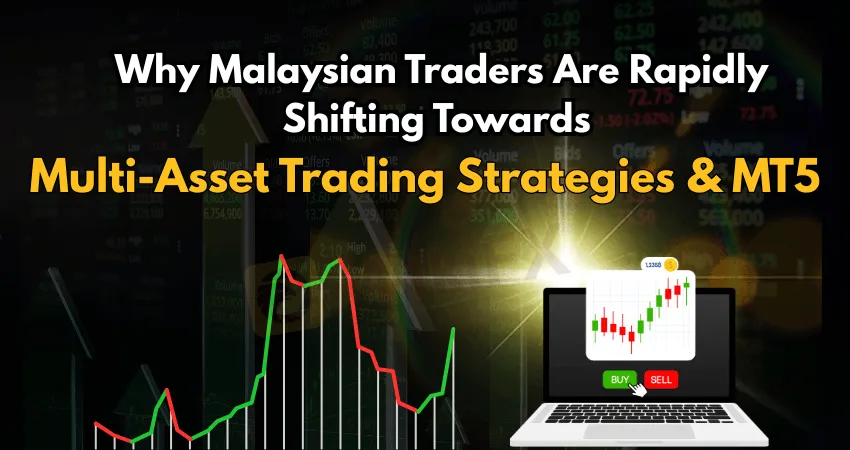
Malaysias retail trading landscape is undergoing a noticeable transformation as traders increasingly move away from single-market strategies and adopt broader multi-asset approaches that combine forex, cryptocurrencies and global instruments within one trading framework.
Within this trend, platforms that support access to multiple asset classes through a unified workflow have become increasingly popular among Malaysian traders. Industry observers note that traders are seeking operational simplicity, centralised risk management and the ability to monitor different markets without constantly switching between separate systems.
The growing interest in multi-asset trading comes at a time when global financial markets are reacting rapidly to inflation expectations, interest rate decisions, geopolitical tensions and shifting investor sentiment. Malaysian traders, particularly retail participants active in online trading communities, increasingly view forex, crypto and broader global markets as interconnected rather than isolated opportunities.
A movement in the US dollar, for example, can influence currency pairs, commodity prices, equity sentiment and digital assets almost simultaneously. As a result, many traders now structure strategies around broader macroeconomic themes rather than focusing on a single chart or instrument.
Malaysias position as a trade-linked economy also contributes to this behaviour. Global growth cycles, commodity demand and regional capital flows often influence local market sentiment. During periods of uncertainty, traders tend to diversify exposure across different instruments rather than depend heavily on one market direction.
Cryptocurrency participation has also become deeply embedded in Malaysias retail trading culture, especially among younger investors attracted to volatility and fast-moving opportunities. At the same time, forex trading continues to maintain strong appeal because of its liquidity, structured trading hours and sensitivity to economic data releases.
The combination of both markets allows traders to remain active across different market conditions. When volatility slows in one sector, attention often shifts towards another.
Beyond forex and crypto, more Malaysian traders are also tracking global indices, commodities and broader risk sentiment indicators to improve decision-making. This wider market awareness has encouraged the development of strategies that use several asset classes together rather than independently.
The operational side of trading has become equally important. Traders managing positions across multiple markets often prefer systems that allow them to analyse trades, monitor exposure and execute orders within one environment. Industry analysts say this reduces friction and helps traders maintain consistency in risk management.
A unified account structure can also improve visibility over total exposure. Traders balancing positions in currencies, digital assets and global instruments are better able to monitor leverage and portfolio concentration when everything is displayed in one place.
This is particularly relevant in Malaysia, where many retail traders participate during both Asian and international trading sessions while balancing full-time jobs or family responsibilities. Simplified workflows can reduce execution mistakes caused by switching between different applications or trading environments.
Performance tracking has also become more sophisticated among retail participants. Traders increasingly evaluate which asset classes contribute positively to long-term performance and which create excessive drawdowns. This allows for strategic adjustments based on market conditions rather than emotional reactions.
A common structure emerging among Malaysian traders is the so-called “core and satellite” approach. In this model, forex positions often serve as the foundation because of their liquidity and strong macroeconomic drivers. Cryptocurrency positions are treated as higher-volatility opportunities with tighter risk controls, while global assets such as indices and commodities are used to confirm broader market direction.
The trend also reflects a growing emphasis on discipline and timing. Traders active across several markets face greater risks of overtrading or reacting impulsively to volatility. Many now build structured routines around economic calendars, central bank announcements and session-based liquidity patterns.
Understanding when markets are likely to trend, consolidate or react sharply to data releases has become increasingly important in multi-asset trading environments.
Industry participants note that the rise of multi-asset strategies is less about chasing more trades and more about building flexibility. Malaysian traders are increasingly adapting to a financial environment where market sentiment moves quickly across sectors and asset classes.
Disclaimer:
The views in this article only represent the author's personal views, and do not constitute investment advice on this platform. This platform does not guarantee the accuracy, completeness and timeliness of the information in the article, and will not be liable for any loss caused by the use of or reliance on the information in the article.
WikiFX Broker
Latest News
StoneX Review 2026: Should You Trade with This Broker?
 WikiFX
Yen Firms While Dollar Pauses
WikiFXGFS Review 2026: Withdrawal Complaints, Weak Regulation Data, and Account Access Risks
WikiFXTRANS X MARKETS Review 2026: Unregulated Status and Serious Withdrawal Complaints
WikiFXRyvoTrade Review 2026: Unregulated Status and Withdrawal Complaints
WikiFXPhillip Nova Review 2026: Should You Trade with This Broker?
WikiFXThinking About KATOPRIME? What Every Trader Should Know Before Depositing Funds
WikiFXYour Backtesting Results Mean Nothing If You Ignore This One Live Trading Reality
WikiFXOver US$2.9 Million Saved: Singapore's Crypto Scam Crackdown Sends a Warning to Malaysian Investors
WikiFXHow Pig Butchering Scams Drain Beginner Trading Accounts
WikiFX