


Global Broker Regulation Inquiry App
About WikiFX
English
简体中文
繁體中文
English
Pусский
日本語
ภาษาไทย
Tiếng Việt
Bahasa Indonesia
Español
हिन्दी
Filippiiniläinen
Français
Deutsch
Português
Türkçe
한국어
العربية
اردو
Prince Group Scandal Deepens: $4 Billion Laundering Network Exposed
Abstract:Billions in crypto fraud erupt into the spotlight as Huione Group (linked to Prince Group founder Chen Zhi) is accused of laundering over US$4 billion, with key suspect Li Xiong extradited from Cambodia to China in an international crackdown.
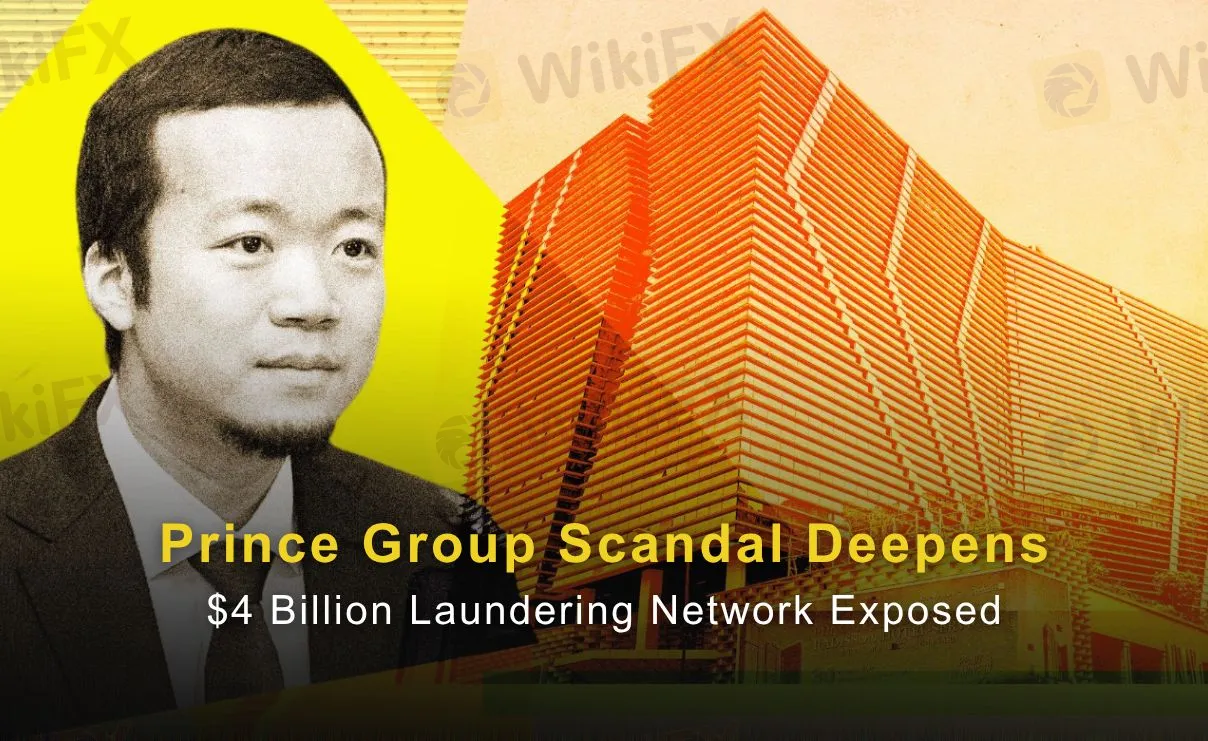
Chinese authorities have confirmed the transfer of Li Xiong from Cambodia to China, marking a significant step in a case tied to billions of dollars in illicit financial flows.
According to reports by CCTV, Li is believed to be a central figure in a network associated with businessman Chen Zhi. Chen is widely known as the founder of Prince Group, a diversified conglomerate with interests spanning real estate, banking and aviation. However, beyond its corporate footprint, US prosecutors have linked operations connected to Chen to large-scale cryptocurrency investment fraud schemes targeting victims across multiple continents.
Cambodian authorities confirmed the extradition, underscoring growing cooperation between regional governments in tackling cyber-enabled financial crime. The move follows a joint investigation supported by Chinese experts, which ultimately led to Lis arrest.
Li previously served as chairman of Huione Group, an organisation now under intense international scrutiny. According to findings by the Financial Crimes Enforcement Network (FinCEN), Huione Group is alleged to have laundered at least US$4 billion in illicit funds between August 2021 and January 2025.
The scale and diversity of the financial flows involved highlight the increasing sophistication of modern cybercrime. FinCENs assessment indicates that the laundered funds originated from a wide range of illegal activities. These include at least US$37 million in cryptocurrency linked to North Korean cyber theft operations, US$36 million tied to fraudulent investment schemes, and approximately US$300 million derived from other forms of cyber-enabled scams.
Such figures reflect a growing trend in which criminal networks exploit digital assets to move funds across borders with limited oversight. The use of cryptocurrencies has allowed these operations to expand rapidly, reaching victims worldwide while complicating enforcement efforts.
The involvement of multiple jurisdictions in the investigation also signals a shift in how authorities are responding to these threats. Cambodian government spokesperson Touch Sokhak indicated that the country is taking a firmer stance against cybercrime. He noted that the case demonstrates Cambodias commitment to eliminating online scam operations and distancing itself from any perception that it provides a safe environment for such activities.
This statement suggests mounting international pressure on Southeast Asian nations to address the proliferation of scam centres operating within their borders. Over recent years, the region has emerged as a hotspot for online fraud, with networks often combining human trafficking, forced labour and advanced digital tools to run large-scale operations.
The extradition of Li may therefore represent more than a single law enforcement success. It could signal a broader regional realignment, as governments strengthen cooperation to dismantle networks that have long operated across loosely regulated jurisdictions.
For financial markets and the global trading community, the implications are significant. The alleged involvement of legitimate business structures in facilitating illicit financial flows raises concerns about due diligence, regulatory oversight and the integrity of cross-border investments. Investors are increasingly being urged to exercise caution, particularly in sectors linked to emerging markets where transparency standards may vary.
Traditional money laundering methods are being replaced or enhanced by complex systems involving cryptocurrencies, shell companies and international partnerships. This evolution presents new challenges for regulators, who must adapt quickly to keep pace with technological change.
While it remains unclear how far the investigation will ultimately extend, the extradition of Li Xiong has already sent a strong message. Authorities appear increasingly willing to pursue high-profile figures and collaborate across borders to bring them to justice.

Disclaimer:
The views in this article only represent the author's personal views, and do not constitute investment advice on this platform. This platform does not guarantee the accuracy, completeness and timeliness of the information in the article, and will not be liable for any loss caused by the use of or reliance on the information in the article.
WikiFX Broker
Latest News
Belgium’s FSMA Flags 25 Fraudulent Trading Platforms
 WikiFX
EPFX Review 2026: Should You Trade with This Broker?
WikiFXCash Trust Scheme Cost 1,800 Victims More Than RM100 Million
WikiFXTHEFALCON MARKETS Review 2026: Is This Forex Broker Safe?
WikiFXACY Securities Review: Regulation Warnings, Withdrawal Pain, and Broker Risk Signals
WikiFXTrading Pro Review: Withdrawal Complaints, FCA Warning, and Broker Risk Exposed
WikiFXChinese Tycoon Guo Wengui Gets 30 Years in US Prison for $1 Billion Fraud Scheme
WikiFXNinja Trader Review 2026: Should You Trade with This Broker?
WikiFXBulge GROUP Review 2026: Regulation, Safety, and Key Risks
WikiFXFake Stock Scheme "UOBS" Costs Kuching Man RM287,000
WikiFXCurrency Calculator
USD

CNY
Current Rate:0
Enter amount
USD
Redeemable Amount
CNY
Calculate 