


Global Broker Regulation Inquiry App
About WikiFX
English
简体中文
繁體中文
English
Pусский
日本語
ภาษาไทย
Tiếng Việt
Bahasa Indonesia
Español
हिन्दी
Filippiiniläinen
Français
Deutsch
Português
Türkçe
한국어
العربية
اردو
4 Years of False Hope: Woman Loses RM96,000 in Investment Scam
Abstract:A 63-year-old pensioner in Kuala Terengganu has lost RM96,000 after being drawn into a long-running online investment scheme that promised high returns but delivered none.
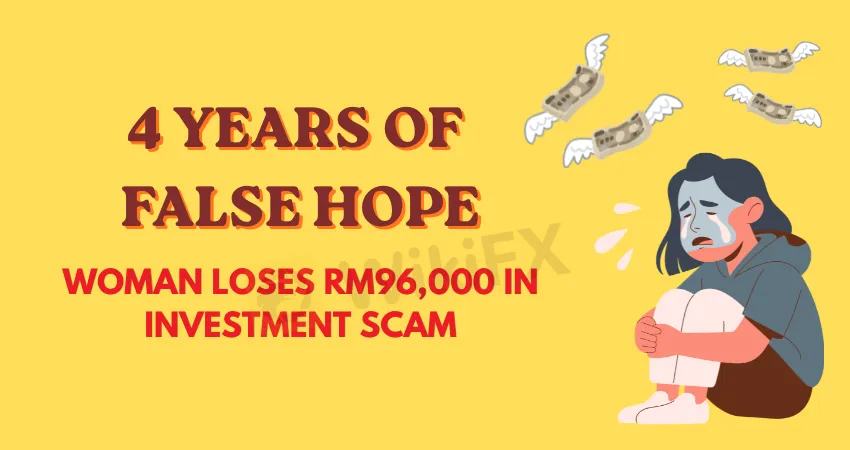
A 63-year-old pensioner in Kuala Terengganu has lost RM96,000 after being drawn into a long-running online investment scheme that promised high returns but delivered none. The case highlights the growing sophistication of financial scams targeting vulnerable individuals, particularly retirees relying on savings and pension income.
According to local authorities, the victim first encountered the scheme in 2022 through an investment advertisement circulated on WhatsApp. The promotion, reportedly linked to a Labuan-based operation, presented itself as a legitimate opportunity with attractive returns. Enticed by the promise of steady profits, the woman initiated contact with the individuals behind the scheme.
Over the course of nearly four years, the victim transferred funds in stages, ultimately making around 50 separate transactions. These payments, amounting to RM96,000, were channelled into 15 different bank accounts. Investigators believe this fragmented payment structure was deliberately designed to obscure the movement of funds and complicate detection.
The money transferred came entirely from the womans personal savings and pension funds, underlining the severe financial impact of the scam. Despite her continued participation and repeated investments, no returns were ever received.
Authorities stated that throughout the entire period, the victim remained hopeful that the promised profits would materialise. However, as time passed without any payout, doubts began to grow. After years of waiting, she eventually realised that she had been deceived.
The woman subsequently lodged a police report, bringing the case to the attention of law enforcement. Officials confirmed that the report was filed only after the victim became certain that the investment scheme was fraudulent.
Police have since launched an investigation under Section 420 of the Penal Code, which deals with cheating and fraud. The case is being treated seriously due to both the financial loss involved and the prolonged nature of the deception.
Law enforcement officials have noted that scams of this kind are becoming increasingly common, often leveraging messaging platforms such as WhatsApp to reach potential victims. These schemes typically rely on persuasive communication, staged credibility, and gradual financial commitments to build trust over time.
The Kuala Terengganu police chief indicated that the structure of this scam—particularly the use of multiple bank accounts and repeated small transactions—reflects a calculated effort to avoid scrutiny. Such tactics make it harder for victims to recognise the warning signs early, as the investment process appears structured and ongoing rather than suspiciously abrupt.
Financial experts warn that the psychological aspect of long-term scams can be particularly damaging. Victims often remain invested not only financially but emotionally, believing that continued participation will eventually yield returns. This can lead to escalating losses as individuals attempt to recover earlier investments.Conducting due diligence before investing is crucial, and independent verification tools such as WikiFX can be instrumental in assessing the legitimacy of brokers and investment firms. The WikiFX mobile application, available on Google Play and the App Store, provides comprehensive insights into brokers regulatory status, customer reviews, and safety ratings. By leveraging such resources, investors can make informed decisions and avoid the financial devastation caused by fraudulent schemes.
Disclaimer:
The views in this article only represent the author's personal views, and do not constitute investment advice on this platform. This platform does not guarantee the accuracy, completeness and timeliness of the information in the article, and will not be liable for any loss caused by the use of or reliance on the information in the article.
WikiFX Broker
Latest News
EMAR MARKETS Review 2026: No Withdrawals Despite Millions Paid in Verification Fees
 WikiFX
US-Iran Tension Rattles Indian Stock Markets Today; Still Some Gained in a Gloomy Scenario
WikiFXFinal Hours for OneCoin Victims: Billions Lost as DOJ Compensation Deadline Looms
WikiFXThe Hidden Drivers of Forex: How Bank Rates and Revaluations Move the Market
WikiFXHe Promised 15% Returns. Now Over 300 Investors Lost $60 Million.
WikiFXReview 2026: Webull FSA Regulation, Mobile App Access, and Complaint Signals
WikiFXFIBOGROUP Review: Offshore Regulation, Withdrawal Complaints, and Broker Red Flags
WikiFXHow to Measure True Currency Strength Beyond a Single Pair
WikiFXReview 2026: OROKU EDGE Regulation Warnings, Withdrawal Complaints, and High Leverage
WikiFXHero FX Review 2026: Is This Forex Broker Safe?
WikiFXCurrency Calculator
USD

CNY
Current Rate:0
Enter amount
USD
Redeemable Amount
CNY
Calculate 