Abstract:When choosing a broker, checking its regulatory status isn't just something to tick off a list - it's the foundation that protects your capital. For a global broker such as Eightcap, understanding its complex network of licenses is extremely important. This analysis goes deeper than surface-level claims, breaking down each license, what it means for you as a trader, and examining the gap between official credentials and growing user complaints. We'll provide a fact-based overview using verified records and investigations to give you a clear, honest picture of the protections and risks when trading with the Eightcap brand.
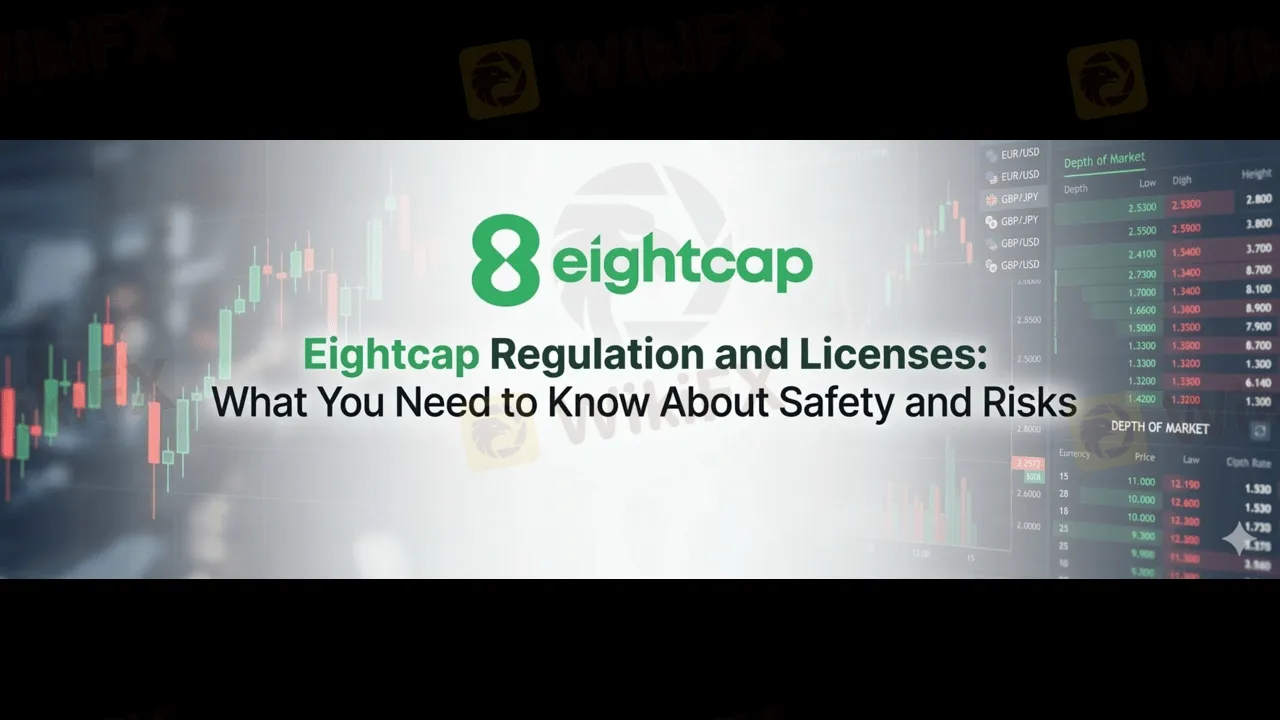
When choosing a broker, checking its regulatory status isn't just something to tick off a list - it's the foundation that protects your capital. For a global broker such as Eightcap, understanding its complex network of licenses is extremely important. This analysis goes deeper than surface-level claims, breaking down each license, what it means for you as a trader, and examining the gap between official credentials and growing user complaints. We'll provide a fact-based overview using verified records and investigations to give you a clear, honest picture of the protections and risks when trading with the Eightcap brand.
How Eightcap Regulation Works
Eightcap operates as a multi-regulated broker, which means it holds licenses in several different countries. This setup allows them to serve clients worldwide, but it creates an important difference for traders. The level of protection, compensation eligibility, and legal help you have depends entirely on the specific company your account is registered with. An account under the UK's FCA is not the same as an account under the Bahamas' SCB. Understanding this difference is the first step in doing proper research.
License Breakdown Around the World
To make Eightcap's status clear, we've gathered its regulatory details from official records. The following table shows a direct comparison of their licenses, the companies it covers, and what each means for trader safety. This information comes directly from public regulatory databases and has been double-checked for accuracy.
Having top-tier regulators such as Australia's ASIC and the UK's FCA is important. These organizations are known for strict enforcement, requiring brokers to meet high capital requirements, keep client funds separate from company capital, and follow fair trading practices. This provides a strong layer of security for traders registered under these specific companies.
Understanding the Eightcap License Types
A license number alone only tells part of the story. The type of license and the country where it's held have direct, practical effects on your trading experience, from potential conflicts of interest to how much leverage you can access. Breaking down these details reveals the operational and risk differences between the various Eightcap companies.
MM vs STP Models
The type of license a broker holds often determines its business model. Eightcap operates under two different models depending on the country, which can affect how your trades are handled.
· Market Making (MM) under ASIC: As a market maker, the broker can act as the other side of a client's trade. This means it can take the opposite side of your position. While this model provides liquidity, it creates a potential conflict of interest, as the broker may profit from a client's losses.
· Straight Through Processing (STP) under FCA/CySEC: Under the STP model, the broker acts as a middleman, passing client orders directly to its liquidity providers, such as banks or other financial institutions. This model generally aligns the broker's interests with the trader's, as its revenue typically comes from spreads or commissions, not from trading against its clients.
Onshore vs Offshore Risks
The most important distinction for traders is whether their account is held with an onshore or offshore company. This single factor determines the strength of the safety net protecting them.
· Onshore (ASIC, FCA, CySEC): Regulators in these top-tier jurisdictions provide strong protections. These include mandatory separation of client funds, ensuring they are not used for the broker's business expenses. Furthermore, traders under the FCA may be eligible for the Financial Services Compensation Scheme (FSCS), which can protect their funds up to a certain limit if the broker fails. CySEC offers similar protection through the Investor Compensation Fund (ICF).
· Offshore (SCB): The main appeal of offshore companies is often the access to much higher leverage, with Eightcap Global Limited offering up to 1:500. However, this comes at a high price. The regulatory oversight is far less strict, and important protections, such as investor compensation schemes, are typically missing. In case of a dispute or the broker's failure, traders have very limited legal options.
To verify the server and regulatory company your account might fall under, you can see a detailed server list on Eightcap's WikiFX profile.
Warning Signs and Positive Signs
A complete analysis requires weighing a broker's official credentials against its real-world track record. While Eightcap shows a strong regulatory profile on paper, a deeper investigation reveals a concerning pattern of user complaints and operational issues that require extreme caution.
Positive Official Credentials
We must first acknowledge the positive aspects of Eightcap's profile, which are the main reasons many traders consider it in the first place.
· Strong Top-Tier Regulation: The licenses from ASIC, FCA, and CySEC are undeniable positive signs. These are among the most respected regulatory bodies globally and show that Eightcap, at least in these jurisdictions, is subject to strict oversight.
· Long-Standing Operation: With an operational history spanning 15-20 years since its establishment in 2009, Eightcap has shown longevity in a highly competitive industry, which often suggests some degree of business stability.
· Verified Physical Office (Australia): A field survey conducted by WikiFX confirmed Eightcap's physical presence at its listed Australian address, verifying a real operational base in its primary regulated region.
A Pattern of Concern
Despite these positives, many warning signs emerge from user experiences and investigative reports. These issues cast doubt on the broker's trustworthiness and cannot be ignored.
· High Number of User Complaints: The WikiFX platform clearly states its score for Eightcap is “reduced because of too many complaints!” As of early 2025, it has received a total of 16 user complaints against the broker. The nature of these complaints is serious and focuses on core functions:
· Withdrawal Problems: Multiple users have reported severe difficulties accessing their funds. One user stated they were “Unable to withdraw funds,” while another claimed, “withdrawal is impossible,” alleging that five withdrawal requests were canceled without explanation.
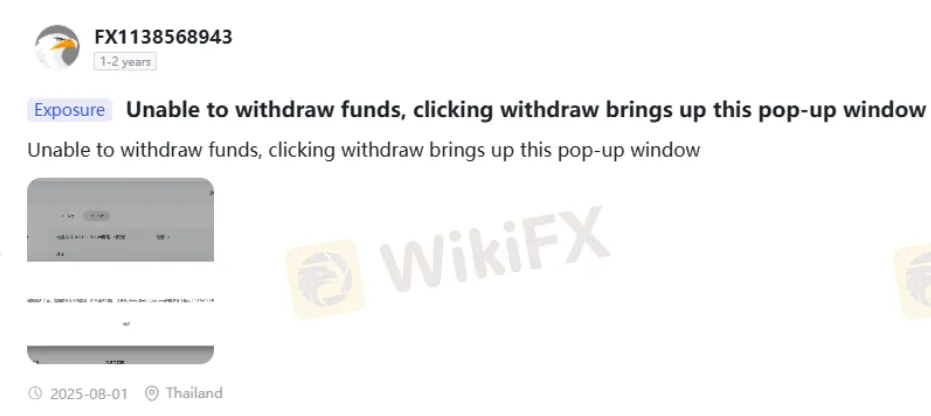
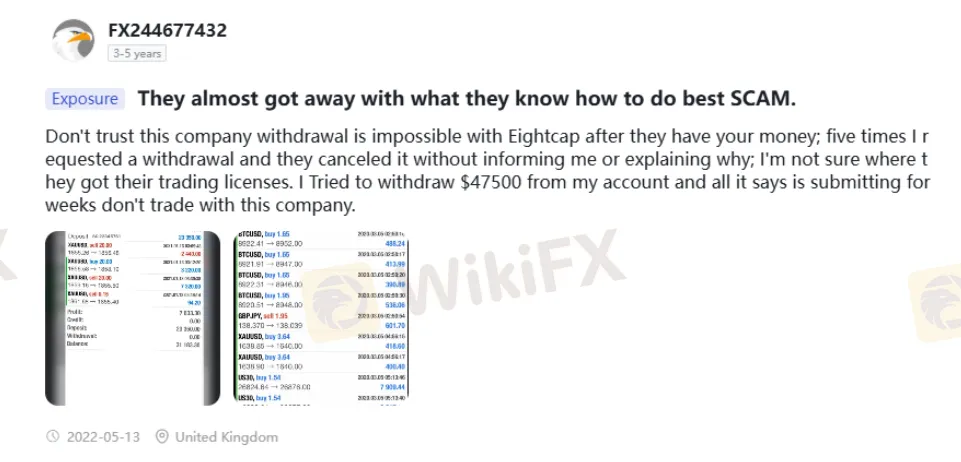
· Significant Financial Loss: A particularly troubling report from one user detailed investing $100,000 and losing the entire amount, alleging poor advice and a subsequent lack of communication from a company representative.
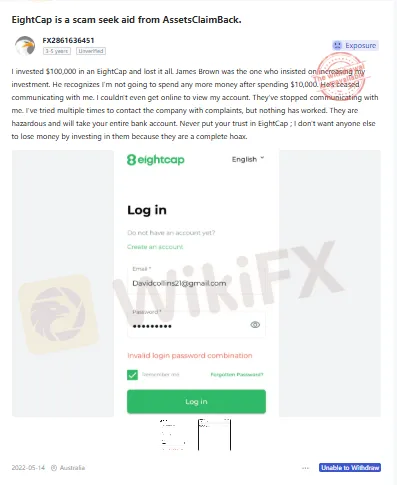
· “High Potential Risk” Warning: Based on its comprehensive data analysis, WikiFX has officially assigned Eightcap a “High potential risk” tag. This classification is reserved for brokers where significant evidence suggests potential harm to traders.
· Differences in Office Presence: In stark contrast to the verified office in Australia, field surveys in Europe raised serious questions. Investigators concluded there was “No Physical Presence Found” for Eightcap's listed addresses in both Cyprus and the United Kingdom. This difference suggests that its operational substance in these key top-tier regulated regions may be less than what its licenses imply.
· FCA Clone Warning: The UK's Financial Conduct Authority has issued a public warning about a “clone firm” operating under the name “Eightcap VIP / eightcap.vip.” Clone firms are fraudulent companies that illegally use the name and details of legitimate, regulated companies to scam investors. This highlights the importance of ensuring you are dealing with a genuine, FCA-regulated company: Eightcap Group Ltd, with firm reference number 921296.
To avoid clone firms and verify you are on the correct website, always cross-reference the official details on the Eightcap WikiFX page.
Eightcap Company Structure
For complete transparency, it is essential to know the specific legal companies that operate under the Eightcap brand in each jurisdiction. This information is important for any legal or contractual purposes and confirms the company you are entering into an agreement with when opening an account.
Registered Company Details
Australia:
· Company Name: EIGHTCAP PTY LTD
· Status: Active
· Registration No.: ABN 73 139 495 944
· Established: 2009-09-16
United Kingdom:
· Company Name: EIGHTCAP GROUP LTD
· Status: Active
· Registration No.: 12448314
· Established: 2020-02-07
Cyprus:
· Company Name: EIGHTCAP EU LTD
· Status: Active
· Registration No.: HE329922
· Established: 2014-07-30
Bahamas:
· Company Name: Eightcap Global Limited
· Status: Active
· Registration No.: 204033B
· Established: 2022-09-13
Conclusion and Final Assessment
Eightcap presents a complex and contradictory profile. On one hand, it holds a strong, multi-jurisdictional regulatory framework that includes licenses from some of the world's most respected financial authorities such as the ASIC and the FCA. This official compliance provides a legitimate foundation and a sense of security that many traders seek.
However, this foundation is significantly weakened by several critical warning signs. The high number of user complaints documented on platforms, such as WikiFX, particularly those concerning the inability to withdraw funds, is a major cause for alarm. This is made worse by investigative findings that question the broker's physical operational presence in the UK and Cyprus, despite holding licenses there. The official “High potential risk” classification from WikiFX serves as a stark warning that cannot be overlooked.
Therefore, while Eightcap is a regulated broker, its operational track record suggests that traders must exercise extreme caution. The gap between its regulatory status and user-reported reality is large. Before committing investments, it is essential to check exactly the regulatory company your account will be under, as this will determine your level of protection. The difference between trading with the FCA-regulated company and the offshore SCB-regulated company is the difference between having a safety net and having none at all.
Given the mixed findings, we strongly advise traders to review the live user complaints and latest risk alerts for Eightcap on the WikiFX platform before making any financial commitment.
Want to know more about forex broker regulation? Dive into our new WikiFX app that effectively compares brokers' various aspects, including their regulatory details. Scan this QR code to start experiencing a positive change in your broker inquiry.