


Global Broker Regulation Inquiry App
About WikiFX
English
简体中文
繁體中文
English
Pусский
日本語
ภาษาไทย
Tiếng Việt
Bahasa Indonesia
Español
हिन्दी
Filippiiniläinen
Français
Deutsch
Português
Türkçe
한국어
العربية
اردو
Trump Threatens 25% Tariffs on South Korea, Reigniting Trade War Fears
Abstract:President Trump has threatened to hike tariffs on South Korean goods to 25%, citing a failure to ratify a 2025 trade deal, sparking renewed trade war fears and potential volatility for the Korean Won (KRW).
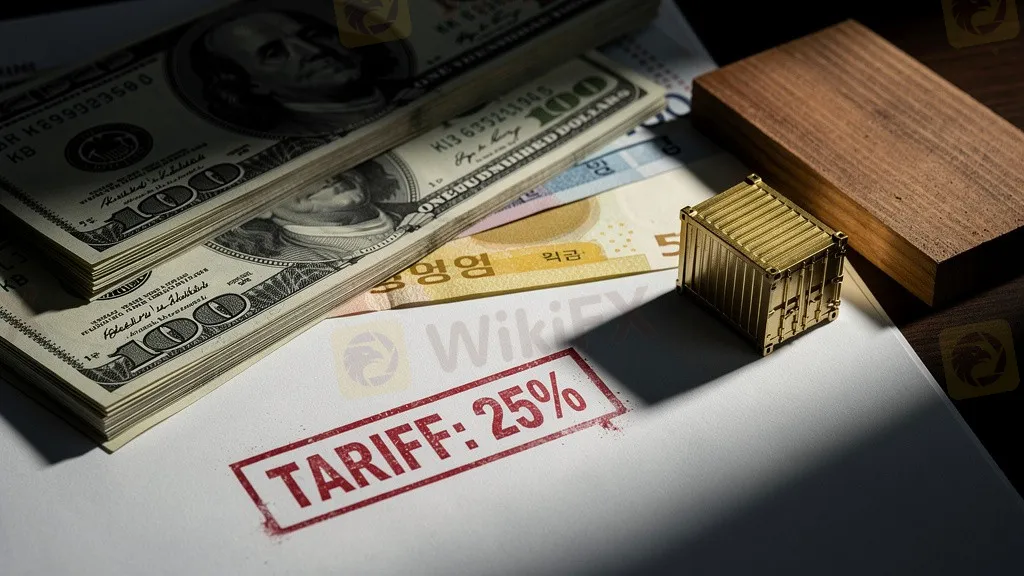
President Donald Trump escalated global trade tensions on Sunday, issuing a direct ultimatum to South Korea via social media. The President announced plans to raise tariffs on South Korean imports—including automobiles, timber, and pharmaceuticals—from 15% to 25%, citing Seoul's failure to ratify a trade agreement reached in mid-2025.
Policy Escalation
In a post on Truth Social, Trump criticized the South Korean National Assembly for failing to implement the bilateral agreement reportedly secured on July 30, 2025. The administration views this inaction as a breach of terms confirmed during the President's visit to Seoul last October.
The threatened tariff hike represents a significant pivot toward protectionism, targeting South Korea's critical export sectors. For currency markets, this development poses an immediate downside risk to the South Korean Won (KRW) and could trigger contagion effects across broader Asian currencies, particularly the Australian Dollar (AUD), which often acts as a liquid proxy for regional trade sentiment.
Key Data Snapshot
- New Tariff Rate: 25% (increased from 15%)
- Affected Assets: KRW, AUD, USD
- Critical Date: July 30, 2025 (Agreement Breach)
Market Implications
Strategists warn that a rekindled trade dispute between Washington and key Asian allies could strengthen the US Dollar (USD) via the safe-haven channel. “If confirmed, a 10 percentage point hike on Korean autos is a structural shock to the export-oriented economy,” analysts note. Markets will be closely watching for Seoul's official response and any signs of retaliatory measures that could further fracture global supply chains.
Disclaimer:
The views in this article only represent the author's personal views, and do not constitute investment advice on this platform. This platform does not guarantee the accuracy, completeness and timeliness of the information in the article, and will not be liable for any loss caused by the use of or reliance on the information in the article.
WikiFX Broker
Latest News
CNMV Warns Against 10 Unauthorized Investment Platforms and Clone Firms
 WikiFX
Dollar Steadies As US Inflation Reaches 4.20%
WikiFXFrom Demo to Real Money: Overcoming the Fear of Holding Your First Live Trade
WikiFXWhy Market News and Spread Shocks Sweep Your Stop Loss
WikiFXHow to Place a Forex Stop Loss Using Market Volatility
WikiFXWhy Weekend Market Gaps and Swaps Destroy Beginner Accounts
WikiFXDollar Slips on Easing Middle East Tensions
WikiFXInstaForex Review 2026: Unverified Regulation, Complaints, and High-Leverage Risk
WikiFXMing Tak Review 2026: Regulation, Complaints, and Platform Access
WikiFXCrypto Scam Call Centre Dismantled in Penang as Authorities Intensify Fight Against Cross-Border Fra
WikiFXCurrency Calculator
USD

CNY
Current Rate:0
Enter amount
USD
Redeemable Amount
CNY
Calculate 