

Global Broker Regulation Inquiry App
About WikiFX
English
简体中文
繁體中文
English
Pусский
日本語
ภาษาไทย
Tiếng Việt
Bahasa Indonesia
Español
हिन्दी
Filippiiniläinen
Français
Deutsch
Português
Türkçe
한국어
العربية
اردو
Geopolitical Shock: Gold Surges as US Captures Venezuelan President; Oil Reaction Muted
Abstract:Geopolitical risk premium has returned to markets following the US military's capture of Venezuelan President Maduro, driving Gold to $4,370 while Oil markets remain unexpectedly subdued due to structural oversupply.
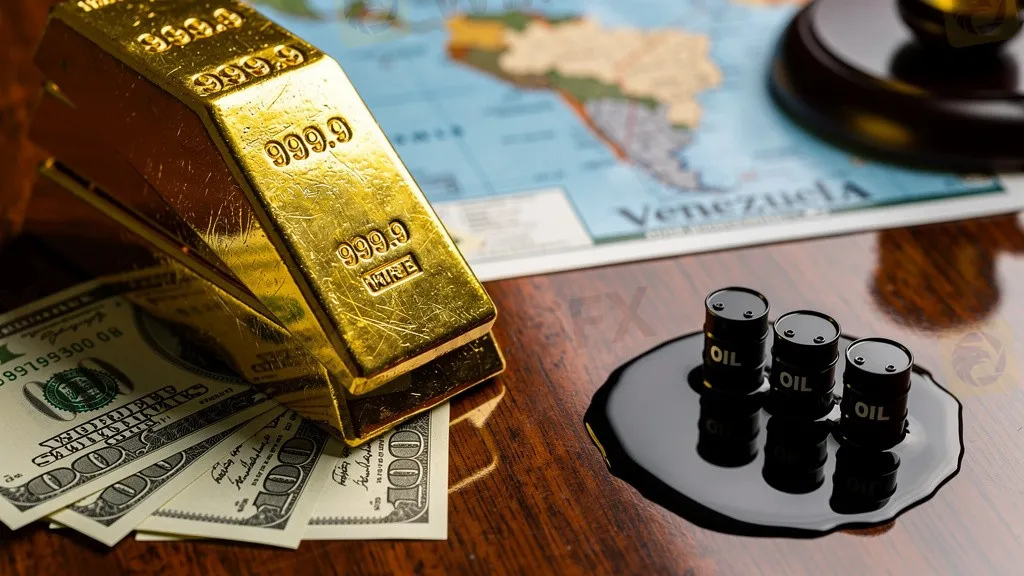
Global markets opened 2026 with a significant geopolitical shock after US forces conducted a military operation in Venezuela, seizing President Nicolás Maduro and transferring him to New York to face charges. The unprecedented move has ignited a flight to safety in precious metals, though energy markets have shown a divergent, muted response.
Safe-Haven Rush: Gold Breaches $4,370
Spot gold (XAU/USD) rallied sharply in Asian trading on Monday, climbing nearly 1.8% to regain the $4,370 level. Investors are pricing in elevated geopolitical instability, not just from the regime change in Caracas, but from the potential for broader regional fallout.
Market strategists at MKS PAMP noted that the seizing of a head of state creates “massive uncertainty,” historically a primary driver for bullion. The reaction is compounded by President Trump's simultaneous renewed rhetoric regarding the purchase of Greenland, which prompted a sharp diplomatic rebuke from Denmark, adding to the perception of an aggressive, unpredictable US foreign policy stance.
The Oil Paradox: Why Prices Aren't Spiking
Despite the turmoil in a nation holding the world's largest proven oil reserves, crude benchmarks (WTI and Brent) traded slightly lower or flat.
Goldman Sachs suggests that in the long term, a US-backed regime change could actually be bearish for oil prices. If US oil majors like Chevron are permitted to rehabilitate Venezuela’s dilapidated infrastructure, significant new supply could enter the market by 2027-2030, exacerbating the global glut.
Diplomatic Fallout
The aggressive US move has drawn condemnation from China, Russia, and a bloc of six Latin American nations including Brazil and Mexico, who warned of a “dangerous precedent.” The UN Security Council is scheduled to meet Tuesday to discuss the crisis, keeping risk appetite fragile.
Disclaimer:
The views in this article only represent the author's personal views, and do not constitute investment advice on this platform. This platform does not guarantee the accuracy, completeness and timeliness of the information in the article, and will not be liable for any loss caused by the use of or reliance on the information in the article.
WikiFX Broker
Latest News
trading.com Review 2026: Regulation, MT5 Access, and Complaint Signals
 WikiFX
Behind The Screenshots: The Forex Success You See Online May Not Be Real
WikiFXThe NFP Gap Slippage: Why Your 1.1000 Stop Executed at 1.0950
WikiFXFBS Review 2026: Complaints, Withdrawals, and Risk Signals
WikiFXDollar Gains While Yen Finds Support
WikiFXDollar Advances on Middle East Conflict
WikiFXThe 3-Bullet Rule: How a Paper Card Stops Overtrading
WikiFXVALUTRADES Review 2026: Slippage Complaints, Regulation, and Safety Risks
WikiFXQuotex Review 2026: Official Warnings, Blocked Accounts, and High Risk
WikiFXAxim Trade Review: Withdrawal Alarms, Weak Regulation, and a Broker Risk Traders Cannot Ignore
WikiFX