

Global Broker Regulation Inquiry App
About WikiFX
English
简体中文
繁體中文
English
Pусский
日本語
ภาษาไทย
Tiếng Việt
Bahasa Indonesia
Español
हिन्दी
Filippiiniläinen
Français
Deutsch
Português
Türkçe
한국어
العربية
اردو
EsaFX Review 2025: Institutional Audit & Risk Assessment
Abstract:EsaFX currently holds a WikiFX Score of 6.98, reflecting its status as a regulated entity under the oversight of Indonesian authorities. While the broker operates within a recognized legal framework, maintaining valid licenses with BAPPEBTI and the Jakarta Futures Exchange, its operational reliability faces scrutiny due to recent client disputes regarding trade execution and fund withdrawals. Consequently, despite a respectable regulatory score, EsaFX is classified as a robust local entity that currently poses elevated operational risks for traders requiring immediate liquidity or high-precision execution.

Executive Summary
EsaFX currently holds a WikiFX Score of 6.98, reflecting its status as a regulated entity under the oversight of Indonesian authorities. While the broker operates within a recognized legal framework, maintaining valid licenses with BAPPEBTI and the Jakarta Futures Exchange, its operational reliability faces scrutiny due to recent client disputes regarding trade execution and fund withdrawals. Consequently, despite a respectable regulatory score, EsaFX is classified as a robust local entity that currently poses elevated operational risks for traders requiring immediate liquidity or high-precision execution.
Quick Take: Pros and Cons
Strengths (✅)
- ✅ Regulatory Oversight: Fully regulated by Indonesia's BAPPEBTI and a member of the Jakarta Futures Exchange (JFX).
- ✅ Platform Standards: Offers industry-standard MT4 and MT5 platforms (Main Label qualification).
- ✅ High Leverage: Access to leverage ratios up to 1:500 for aggressive capital efficiency.
- ✅ Mobile Integration: Dedicated mobile support for Android and iOS systems.
Risk Factors (❌)
- ❌ Operational Complaints: Recent severe reports of stop-loss failures and withdrawal obstructions.
- ❌ Limited Asset Diversity: Trading appears limited to Forex, Oil, and Precious Metals (No Crypto/Stocks data).
- ❌ Security Gaps: Lack of biometric authentication (2FA) for trading platforms.
- ❌ Support Latency: Customer service is noted for slow response times despite multichannel availability.
Regulatory Compliance & Safety Profile
License Verification
EsaFX (PT. ESANDAR ARTHAMAS BERJANGKA) demonstrates a verifiable legal footing within the Indonesian financial system. The corporate structure is subjected to dual oversight:
- Commodity Futures Trading Regulatory Agency (BAPPEBTI): License No. 485/BAPPEBTI/SI/IX/2004.
- Jakarta Futures Exchange (JFX): License No. SPAB - 070/BBJ/05/04.
Regulatory Implications
The active regulation by BAPPEBTI is the primary anchor of EsaFX's safety rating. In the context of Indonesian financial markets, this regulator plays a role analogous to the CFTC in the US, albeit with different enforcement nuances.
- Segregation of Funds: BAPPEBTI compliance typically mandates that client funds be segregated from the brokers operational capital, theoretically protecting traders in the event of corporate insolvency.
- Dispute Resolution: Membership in the JFX provides a formalized channel for arbitration. However, international clients should be aware that cross-border dispute resolution with Indonesian entities can be legally complex compared to FCA (UK) or ASIC (Australia) jurisdictions.
- Capital Requirements: The “Main Label” status for their trading software and long-standing license (since 2004) suggests the broker meets significant capitalization requirements, reducing the risk of “fly-by-night” operations common in unregulated offshore entities.
Trading Infrastructure & Costs
Leverage Policy
EsaFX offers a maximum leverage of 1:500. From a risk management perspective, this ratio is significantly higher than the limits imposed by European (ESMA) or Australian (ASIC) regulators, which typically cap retail leverage at 1:30. While highly attractive for traders seeking to maximize exposure with limited capital, this level of leverage amplifies counterparty risk. If the broker does not have robust risk management (STP/ECN execution), 1:500 leverage can incentivize the broker to trade against the client (B-Book model).
Cost Structure
The cost analysis reveals a tiered structure based on account types:
- TradingView & Zero Accounts: Data indicates spreads starting from “15” (likely 1.5 pips). For a “Zero” account, a spread of 1.5 pips is contradictory to industry standards, where “Zero” usually implies 0 pips with a commission. If this figure represents the raw spread without commission, it is relatively high compared to industry averages of 1.0–1.2 pips for standard accounts.
- Pro Account: Spreads start from “1” (likely 0.1 to 1.0 pip). This suggests that competitive pricing is gated behind higher deposit requirements or specific account statuses.
Software Architecture
EsaFX utilizes strong technical infrastructure.
- MT4/MT5 Main Label: Unlike white-label brokers that rent server space, EsaFX appears to hold a Main Label license. This grants them full control over their trading server, bridge technology, and liquidity aggregation.
- TradingView Integration: The account naming convention “TradingView” strongly suggests API integration or direct support for the TradingView charting interface, a significant advantage for technical analysts.
- Security Note: A notable weakness in the infrastructure is the absence of biometric authentication. in an era where credential stuffing attacks are common, the lack of 2-factor authentication or biometrics on the app is a cybersecurity oversight.
Market Sentiment: User Complaints
Risk Factors
Despite the strong regulatory framework, recent user feedback highlights critical operational failures that cannot be ignored during due diligence.
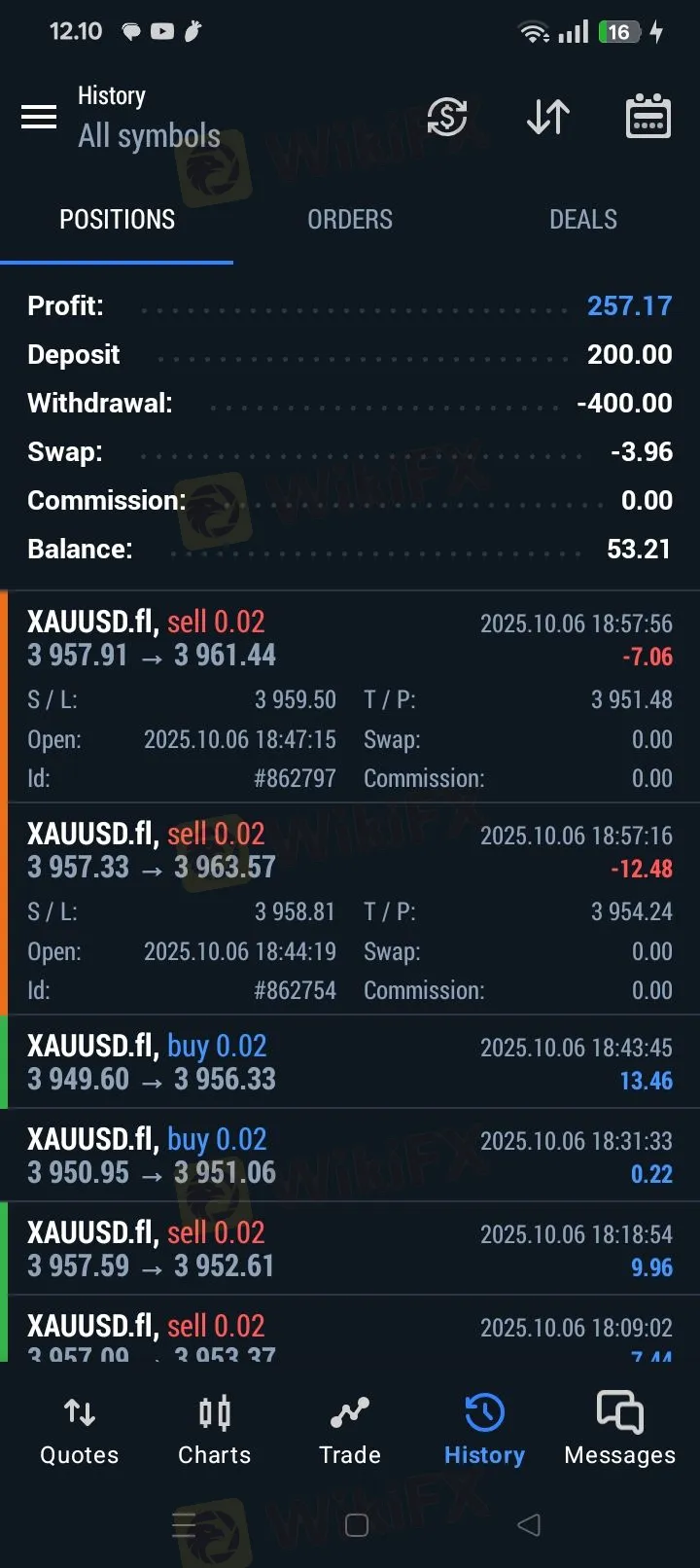
Case Study: Execution and Liquidity Failure (October 2025)
A verified user reported a severe malfunction regarding risk management tools and fund access.
- The Issue: The trader set a “Stop Loss” which the broker failed to execute. This failure to trigger a stop loss indicates potential issues with the broker's execution engine or profound slippage during volatility.
- Liquidity Trap: Following the trading loss (attributed to the system failure), the user attempted to withdraw the remaining balance but was unable to do so (“I still have balance in my account but I can't take it out”).
- Analyst Note: A failure to honor Stop Loss orders is a “Level 1” risk event, as it breaches the core functionality of a trading platform. Coupled with withdrawal denial, this complaint suggests potential liquidity stress or unethical retention tactics, contradicting the safety usually implied by BAPPEBTI regulation.
Final Verdict
EsaFX presents a complex profile for the institutional or retail trader. On paper, it is a legitimate, long-standing entity with verified BAPPEBTI regulation and credible Main Label MT4/MT5 infrastructure, justifying its respectable WikiFX Score of 6.98. The presence of local regulation offers a safety net that is absent in unregulated offshore brokerages.
However, the “Paper Safety” is currently at odds with “Operational Reality.” The reported inability to process withdrawals and the failure of basic risk management orders (Stop Loss) act as significant warning signs. For Indonesian residents, the local legal recourse makes this a viable option, but international traders should exercise extreme caution. The discrepancy between the “Zero” account name and the reported spreads also requires clarification before capital commitment.
Recommendation: Proceed with caution. Test withdrawal speeds with minimum capital before committing significant funds.
For the most current regulatory certificates and real-time blocklisting status, verify EsaFX on the WikiFX App.
Disclaimer:
The views in this article only represent the author's personal views, and do not constitute investment advice on this platform. This platform does not guarantee the accuracy, completeness and timeliness of the information in the article, and will not be liable for any loss caused by the use of or reliance on the information in the article.
WikiFX Broker
Latest News
TRANS X MARKETS Review 2026: Unregulated Status and Serious Withdrawal Complaints
 WikiFX
RyvoTrade Review 2026: Unregulated Status and Withdrawal Complaints
WikiFXPhillip Nova Review 2026: Should You Trade with This Broker?
WikiFXGFS Review 2026: Withdrawal Complaints, Weak Regulation Data, and Account Access Risks
WikiFXYen Firms While Dollar Pauses
WikiFXStoneX Review 2026: Should You Trade with This Broker?
WikiFXThinking About KATOPRIME? What Every Trader Should Know Before Depositing Funds
WikiFXYour Backtesting Results Mean Nothing If You Ignore This One Live Trading Reality
WikiFXHow Pig Butchering Scams Drain Beginner Trading Accounts
WikiFXWeltrade Review 2026: Is This Forex Broker Safe?
WikiFX