Abstract:A US$15 billion crypto fraud linked to Cambodia’s Prince Group has sparked a global investigation involving Singapore nationals, local firms, and hidden offshore assets, exposing what could be one of Asia’s most staggering financial scandals.
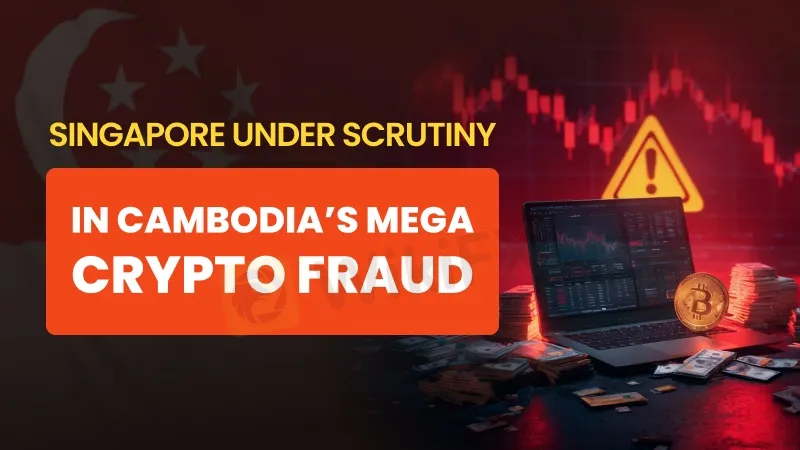
A massive international fraud case involving US$15 billion (about RM633.9 billion) in cryptocurrency and telecommunications scams has triggered a multi-country investigation. At the centre of the scandal is Chen Zhi, the chairman of Cambodias Prince Group, who now faces serious charges in the United States for what authorities describe as one of the largest investment frauds in modern history.
Singapores police have confirmed that they are investigating three Singapore citizens and 17 locally registered companies linked to Chen and his business network. The authorities have also established contact with foreign law enforcement agencies to assist in the ongoing probe.
 Contents
One of the Biggest Financial Scams in History
According to reports from the US Attorneys Office in Brooklyn, the 38-year-old Chen is accused of leading a large scale criminal operation that used his business empire to commit telecommunications fraud, bribery, money laundering, and human rights violations.
Prosecutors allege that Chens companies engaged in online gambling, illegal cryptocurrency mining, and cross-border investment scams to move and conceal vast amounts of illicit funds. Workers at his operations were reportedly subjected to violence and exploitation, while the group allegedly paid bribes to foreign officials to protect its activities.
American authorities described the case as “one of the largest investment frauds ever recorded”, with losses spreading across several countries, including Cambodia, Thailand, and Singapore.
Singapore Entities Implicated
The United States Department of the Treasury‘s Office of Foreign Assets Control (OFAC) has released a sanctions list naming three Singapore nationals, Chen Xiuling, Tang Nigel Wan Bao Nabil, and Yeo Sin Huat Alan, as individuals connected to Chen Zhi’s Prince Group.
In addition, 17 companies registered in Singapore have also been placed under sanctions for allegedly assisting in the groups financial activities.
The investigation has raised serious concerns about the misuse of Singapores financial system by foreign entities seeking to legitimise criminal profits through local companies.
Temasek Denies Any Connection
Following the announcement, Temasek Holdings, Singapores state-owned investment firm, issued a public statement on 17 October to deny any involvement with the Prince Group or its subsidiaries.
Temasek clarified that it has no business or financial ties to any of the sanctioned entities. The company also denied any participation in the appointment of directors at 17Live, a Singapore Exchange listed company linked to one of the sanctioned individuals, Chen Xiuling.
Temasek further criticised a recent Bloomberg report, calling it misleading for suggesting that the firm or its portfolio companies might be connected to the group under investigation.
Authorities Across Asia Take Action
The scale of the alleged fraud has drawn attention from regulators in several countries.
It was reported that Chen and his associates established a family office, DW Capital Holdings, in Singapore in 2018, claiming to have received tax incentives from the Monetary Authority of Singapore (MAS).
MAS has since confirmed that it is reviewing the matter to determine whether the company breached any local financial regulations or compliance requirements.
In Thailand, the Ministry of Justice is also considering charges against Chen for conspiracy to commit telecommunications fraud and money laundering. Thailand‘s Cyber Crime Investigation Bureau has confirmed ongoing cooperation with US authorities to trace Chen’s assets in Thailand.
Meanwhile, in the United Kingdom, the government has frozen 19 properties linked to Chen, including a London office building valued at £100 million (about RM567.7 million) and a luxury residence worth £12 million (about RM68.1 million).
A Wake Up Call for Investors in Asia
This case is yet another warning for investors across Asia about the dangers of unregulated investment platforms and cryptocurrency schemes. Fraudsters often use complex corporate structures, offshore registrations, and professional branding to appear legitimate.
Once victims invest, the money is quickly moved across borders, often through companies in jurisdictions with weak financial oversight. By the time authorities intervene, tracing and recovering the funds becomes nearly impossible.
How WikiFX Protects Investors from Global Scams
As investment scams grow in scale and sophistication, WikiFX serves as a crucial line of defence for traders and investors. The platform allows users to verify the authenticity, licence, and regulatory background of forex brokers and financial service providers worldwide.
WikiFX operates a global database that gathers information from more than 30 trusted financial regulators, including the Monetary Authority of Singapore (MAS), the Financial Conduct Authority (FCA) in the United Kingdom, and the Australian Securities and Investments Commission (ASIC).
Using the WikiFX mobile app, investors can instantly search any company or trading platform to find out whether it is licensed, suspended, or operating without proper oversight.
If the investors in this scandal had used WikiFX, they could have discovered early warning signs such as:
- Absence of valid licensing under recognised regulators
- High-risk warnings related to associated entities
- Reports of suspicious activities or fake operations
These alerts could have helped investors avoid becoming victims in what has now become one of the worlds most significant financial crimes.
WikiFX is not only a verification tool but also a global watchdog that promotes transparency and accountability in the online trading industry.
The platform offers a wide range of resources, including:
- Broker ratings and credibility scores based on regulation and user feedback
- Blacklists of unlicensed and scam brokers
- Real-time risk notifications about suspicious investment activities
- Educational content to improve financial literacy among investors
WikiFX also collaborates with law enforcement agencies and regulatory bodies in several countries to share information about fraudulent entities and protect investors from cross-border scams.
In addition, the apps community feature allows users to share real experiences, helping others stay alert to potential risks.
With scams like this spreading across Asia, awareness is your best protection.
Stay informed. Stay vigilant.