Abstract:Find out the best indicator for forex trading in the Philippines. Master MACD strategies, boost accuracy, and achieve consistent profits as a Filipino trader.

Forex trading has become one of the most dynamic forms of investment in the Philippines, offering opportunities for individuals to grow their wealth through currency exchange. Yet, among the thousands of Filipino traders entering the market daily, only a small fraction consistently achieve lasting success. The secret isn‘t merely strategy — it’s understanding how to use the best indicator for forex trading effectively.
In the fast-paced world of Forex, indicators are the compass guiding traders through uncertainty. But not all indicators are created equal. Determining the best one requires expertise, discipline, and practical knowledge of market timing — especially for Filipino traders dealing with both global economic trends and local market sentiment.
 Contents
Understanding Forex Indicators
Forex indicators are technical tools derived from mathematical formulas applied to price, volume, or volatility data. They allow traders to interpret market conditions and anticipate potential movements before they occur. In the Philippines, where traders balance global currency exposure and local financial goals, indicators help manage risks and improve entry and exit precision.
There are five main categories of Forex indicators:
- Trend indicators: Measure the direction and strength of market trends (e.g., Moving Averages, MACD).
- Momentum indicators: Gauge the speed of price movement (e.g., RSI, Stochastic Oscillator).
- Volatility indicators: Track how far prices move within a timeframe (e.g., Bollinger Bands).
- Volume indicators: Reflect trading activity levels (e.g., On-Balance Volume).
- Support and resistance indicators: Identify price points where reversal is likely (e.g., Pivot Points, Fibonacci Retracements).
Each type offers insights from different angles. However, when combined effectively, they form the backbone of a strong trading analysis strategy — especially for Filipino traders who value precision and discipline.
The Reality: No Single Perfect Indicator
Many beginners ask: “What is the best indicator for forex trading?” Realistically, no single indicator guarantees profit. Markets are too fluid. Success comes from using multiple indicators in harmony. However, one indicator stands out as most reliable when used with confirmation — the Moving Average Convergence Divergence (MACD).
Why MACD Is the Best Indicator for Forex Filipino Traders
The MACD, or Moving Average Convergence Divergence, is a trend-following momentum indicator that tracks the relationship between two exponential moving averages (EMAs). It helps traders identify shifts in momentum, confirm trends, and signal reversals.
For Filipino traders, MACD offers three key advantages:
- Clarity of Trend Direction
- The Filipino market often experiences volatility influenced by global news such as U.S. interest rates, oil prices, or remittance flows. MACD filters this noise by highlighting genuine trend movements.
- Simplicity for Beginners
- MACDs visual setup—consisting of a signal line, MACD line, and histogram—allows even new traders to interpret signals without overcomplication.
- Precision for Timing
- When trading major pairs like USD/PHP or EUR/USD, MACD crossovers help identify entry points before large market moves occur.
Example:
When the MACD line crosses above the signal line, it indicates bullish momentum—ideal for buying. When it crosses below, it signals bearish momentum—ideal for selling.
This simplicity and reliability make MACD the best indicator for forex success among Filipino traders adapting to both global and local market conditions.
Pairing MACD With Other Indicators
To further refine accuracy, professionals combine MACD with complementary tools such as:
- Relative Strength Index (RSI): Confirms overbought or oversold conditions.
- Bollinger Bands: Measures volatility to pinpoint breakout potential.
- Fibonacci Retracement: Locates ideal profit-taking levels.
- Volume Profile: Validates price strength by trading activity.
A well-balanced combination mitigates false signals and boosts trading reliability. This hybrid strategy is favored among Filipino traders aiming to maintain consistency.
Historical Reliability and Professional Validation
Experienced Filipino traders, including full-time professionals in Metro Manila and Cebu, often describe MACD as their “go-to indicator” for swing trading and intraday setups. Over time, data analytics from platforms like MetaTrader 4 and TradingView confirm MACDs dependability in predicting reversals with high accuracy across global pairs.
Notably, investors with practical experience highlight that MACDs signals align well with market psychology. When Filipino traders integrate economic events—such as changes in remittance volume or central bank announcements—the MACD often acts as a stabilizing reference amid market uncertainty.
Strategy Example: Using MACD in Real Trades
Consider a Filipino trader analyzing the USD/PHP pair. Suppose the MACD line crosses above the signal line while the histogram turns positive. This scenario confirms bullish momentum—suggesting a good entry to buy. By setting stop-loss levels 20–30 pips below support and take-profit levels near recent resistance, the trader ensures risk control.
Combining MACD with Fibonacci retracement helps the trader refine profit zones logically. This structured approach strengthens discipline, the hallmark of sustainable success.

Common Mistakes When Using Indicators
Even with the best indicator for forex trading, mistakes occur:
- Overtrading signals: Acting on every small crossover instead of waiting for confirmation.
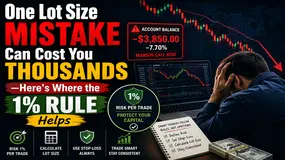
- Ignoring risk management: Misjudging leverage and lot size relative to account balance.
- Neglecting news events: MACD should complement, not replace, fundamental analysis such as interest rate updates or geopolitical factors.
- Failure to adjust settings: MACD defaults vary by timeframe; fine-tuning parameters ensures more accurate signals.
Filipino traders succeeding in high-volatility environments adjust the MACDs fast and slow EMA periods based on preferred timeframes: shorter for intraday, longer for position trading.
The Psychological Factor in Indicator Usage
Technical indicators dont guarantee success unless traders master emotional discipline. Filipino traders, known for high adaptability and strong community engagement, benefit from maintaining consistent routines when applying indicators.
Developing patience and trust in one's trading plan separates disciplined traders from emotional decision-makers. Understanding that indicators reflect probabilities—not certainties—creates healthier expectations.
Expert Advice for Sustainability
Filipino experts in Forex trading often highlight three pillars for success:
- Education: Understand both global economics and technical systems.
- Backtesting: Validate indicators against historical data before live trading.
- Risk-to-reward consistency: Never risk more than 2–3% per trade.
MACD, reinforced by these pillars, ensures long-term growth and steady profitability.
Building a Filipino Forex Strategy Around MACD
A practical daily routine may include:
- Reviewing currency fundamentals at 8 AM (local time).
- Analyzing MACD signals across preferred pairs.
- Setting trades with clear stop-loss and take-profit targets.
- Monitoring volatility influence from international sessions (London, New York).
- Journaling every trade outcome for pattern improvement.
This approach combines technical consistency and disciplined execution, vital for developing professional-level trading habits among Filipino traders.
MACD vs. Other Leading Indicators
This comparison reiterates that MACD integrates multiple strengths, making it the best indicator for forex trading success in Filipino setups.
Why Filipino Traders Excel Using MACD
Filipino traders have a unique perspective on Forex: careful risk management, community-driven learning, and adaptability under global event pressure. MACD matches these traits perfectly:
- Cultural compatibility: The indicators simplicity supports collaborative learning across local trading groups.
- Economic relevance: It responds well to USD/PHP dynamics affected by remittances and interest rate policy.
- Technical precision: Filipino traders prefer clear, actionable signals—MACD provides that clarity.
Final Thoughts: The Path to Forex Success Filipino
Success in Forex trading in the Philippines doesnt rely purely on luck or intuition. It depends on systematic strategies backed by reliable indicators like MACD. By combining technical accuracy, psychological discipline, and sound risk management, any Filipino trader can turn volatility into opportunity.
In the ever-changing Forex world, MACD stands as the best indicator for forex trading Filipino practitioners can rely on. It bridges simplicity and effectiveness—traits deeply valued in Filipino trading culture.
Continuous learning, data validation, and humility form the foundation for long-term success. When Filipino traders blend MACD insights with disciplined practice, the path to mastery becomes not just possible, but sustainable.