WikiFX Trending Topics Analyst Initiative
Share Your Expertise on What’s Moving the Market.
简体中文
繁體中文
English
Pусский
日本語
ภาษาไทย
Tiếng Việt
Bahasa Indonesia
Español
हिन्दी
Filippiiniläinen
Français
Deutsch
Português
Türkçe
한국어
العربية
Abstract:The dollar faces its biggest decline of the year, strong-dollar logic challenged.
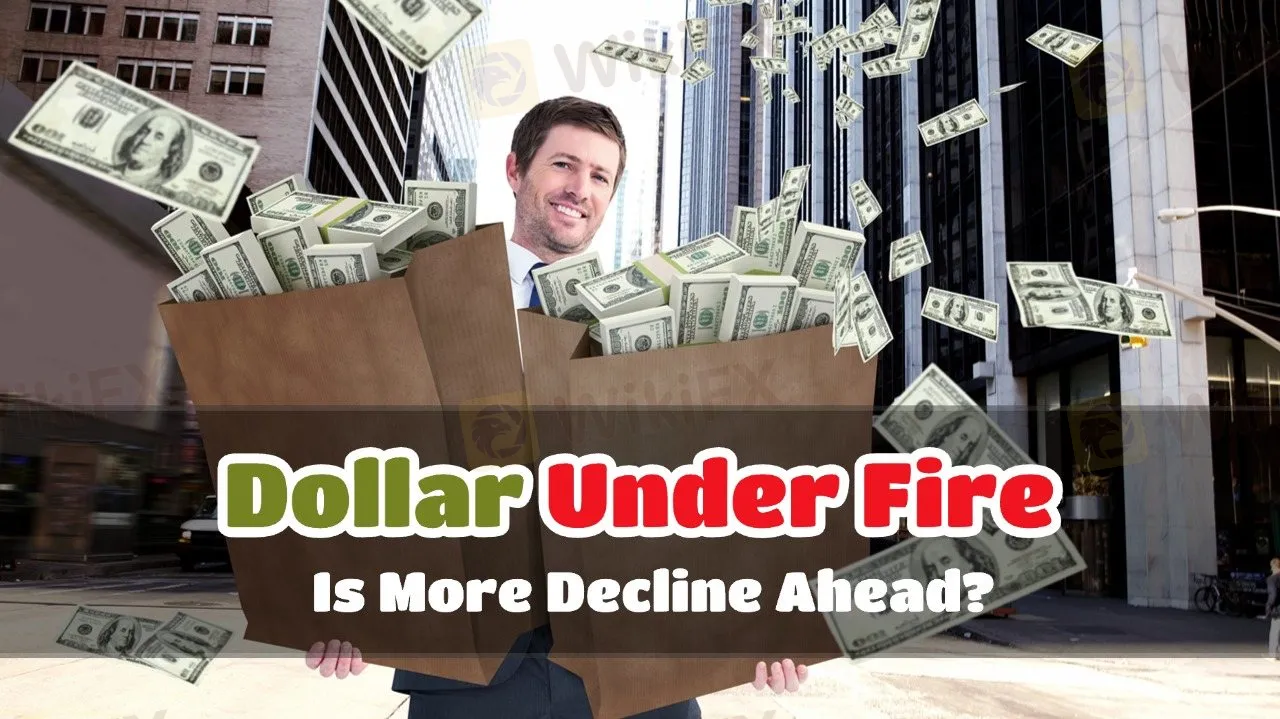
Last week, the U.S. dollar experienced its steepest decline of the year, dropping more than 3% in a single week.
The European Union and Germany broke fiscal constraints to increase defense spending, pushing the euro and European bond yields sharply higher. Non-U.S. currencies strengthened across the board, with the Swedish krona, euro, and Norwegian krone posting significant gains.
In contrast, the Canadian and Australian dollars saw limited gains due to shifting market risk sentiment. The dollars continued breakdown suggests a potential long-term trend reversal may be underway.
The fundamental logic behind the strong dollar is facing mounting pressure. The Trump administration's tax cuts have been progressing slowly, while fiscal tightening is becoming more evident. Additionally, tariffs have been used more as a negotiation tool rather than as a means to truly restrict trade, failing to provide meaningful support for the dollar.
Furthermore, Europe‘s increased fiscal spending could prompt other economies to follow suit, narrowing interest rate differentials between the U.S. and other countries, further weakening the dollar’s advantage.
If the U.S. continues its path of fiscal tightening while its trade partners adopt more aggressive fiscal stimulus policies, the dollar's attractiveness may decline further. In addition, uncertainties in the global economic environment, fluctuations in U.S. Treasury yields, and geopolitical factors could all play a crucial role in shaping the dollars future trajectory.
Given the potential weakness of the dollar, investors should closely monitor global economic policy shifts, particularly major economies fiscal policy changes.
A well-diversified portfolio, with exposure to non-U.S. currencies and safe-haven assets, could help mitigate risks and navigate potential market volatility.

Disclaimer:
The views in this article only represent the author's personal views, and do not constitute investment advice on this platform. This platform does not guarantee the accuracy, completeness and timeliness of the information in the article, and will not be liable for any loss caused by the use of or reliance on the information in the article.

Share Your Expertise on What’s Moving the Market.

Strong retail participation in 2026 is driving forex and CFD trading volumes higher, as investors expand beyond equities into macro-sensitive markets.

In a forex market where fundamental and technical factors impact the currency pair prices, volatility is expected. If the price volatility acts against the speculation made by traders, it can result in significant losses for them. This is where a stop-loss order comes to their rescue. It is one of the vital investment risk management tools that traders can use to limit potential downside as markets get volatile. Read on as we share its definition and several strategies you should consider to remain calm even as markets go crazy.

The forex market is a happening place with currency pairs getting traded almost non-stop for five days a week. Some currencies become stronger, some become weaker, and some remain neutral or rangebound. If you talk about the Indian National Rupee (INR), it has dipped sharply against major currencies globally over the past year. The USD/INR was valued at around 85-86 in Feb 2025. As we stand in Feb 2026, the value has dipped to over 90. The dip or rise, whatever the case may be, impacts our daily lives. It determines the price of an overseas holiday and imported goods, while influencing foreign investors’ perception of a country. The foreign exchange rates change constantly, sometimes multiple times a day, amid breaking news in the economic and political spheres globally. In this article, we have uncovered details on exchange rate fluctuations and key facts that every trader should know regarding these. Read on!