Abstract:The Philippine peso anticipates a year-end recovery driven by strong remittances, lower oil prices, and easing dollar strength amid the holiday season.
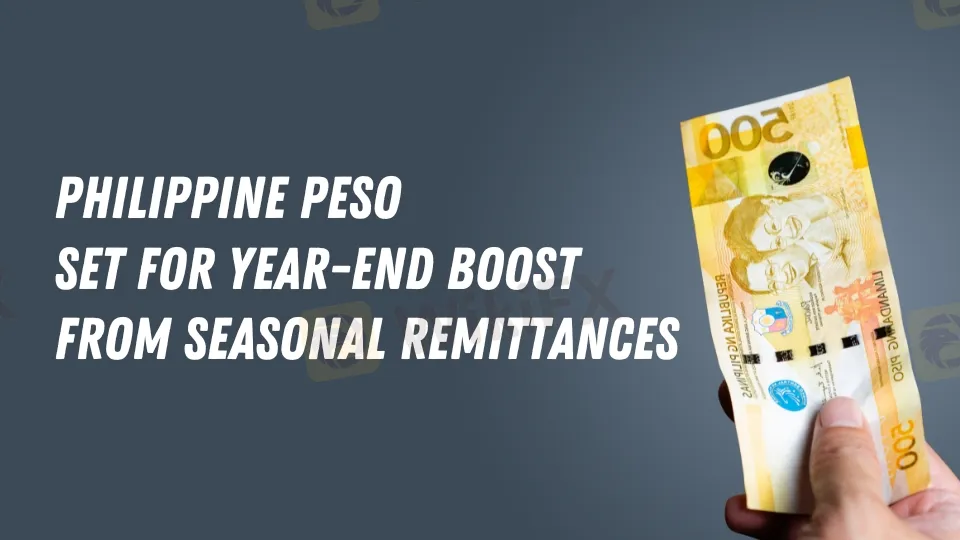
The Philippine peso, which has been under pressure since October, is likely to recover before the end of the year, owing to a seasonal rise in overseas Filipino worker (OFW) remittances. As Christmas approaches, these remittances normally increase, bolstering the value of the peso. This tendency has occurred in six of the previous seven years, and experts predict a similar conclusion in 2024.
According to the Australia and New Zealand Banking Group (ANZ), the peso might rise by more than 5% by the end of the year. The euro has fallen almost 4% this quarter, but experts believe it will reverse. According to Michael Ricafort, chief economist of Rizal Commercial Banking Corp., the peso will rise by around 4% by December. He observes that this seasonal stream of remittances, together with lower world oil prices, provide natural support for the peso.

Remittances reached $33.5 billion in 2023, making it one of the Philippines' most important foreign currency sources. These inflows provide a significant buffer for the peso and may offset the current decline that has driven the currency approaching a record low versus the US dollar.
Furthermore, any rate reduction by the US Federal Reserve may help the peso.
The Philippines is strongly reliant on fuel imports, therefore the drop in world oil prices is especially important. Lower oil prices aid in the reduction of the country's trade imbalance, relieving pressure on the local currency. The peso rose 0.8% this week, trading at 58.26 versus the US dollar.
However, others are concerned about the dollar's potential strength in the face of shifting US policy. Furthermore, future remittances from the United States may be influenced by changes in immigration rules. Nonetheless, experts observe that the Philippines' lower inflation rates and positive balance of payments provide a favorable environment for the peso's rise until the end of the year.
Khoon Goh, director of Asia research at ANZ, believes the peso will rise to 55.5 per dollar by December.
Final Thoughts
As the Christmas season approaches, the Philippine peso is expected to benefit from increased remittances and reduced oil costs. While certain dangers remain, a healthy balance of payments and low inflation indicate that the peso is on pace for a year-end rebound, offering hope for the Philippine economy in the face of global uncertainty.