Abstract:The article delves into the factors contributing to financial losses among retail traders in the forex and CFD markets and provides insights on risk mitigation and selecting trustworthy brokers.
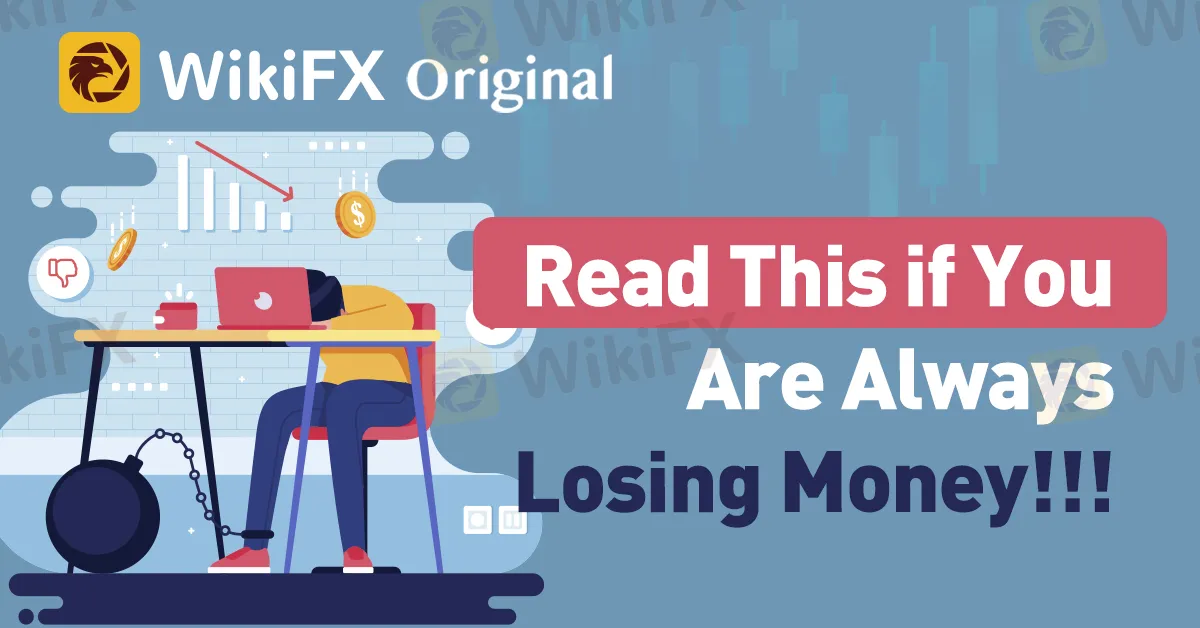
The world of retail trading in forex and CFDs can be unforgiving, with a staggering 80% of traders experiencing financial losses. The extent of these losses varies depending on the broker, but it could be even higher in regions where regulators do not mandate brokers to disclose the percentage of traders who lose money on their platforms.
There are several contributing factors to these alarming statistics. Firstly, the lack of regulation in some geographical areas allows unscrupulous brokers to operate freely. Additionally, the relentless advertising campaigns by scam brokers, which often promise high leverage and guaranteed returns on investments, mislead unsuspecting traders. Furthermore, inadequate knowledge and understanding of the market among retail traders also play a significant role in these financial setbacks.
One of the primary reasons for retail traders' losses is the use of excessive leverage. While leverage can be a useful tool for generating profits, it also carries significant risks. Retail traders must comprehend that utilizing leverage means borrowing funds from the broker, with the trader keeping a margin with the broker. If losses accumulate and approach the margin requirements, the broker has the authority to close the trader's position. A high leverage ratio, such as 1:400, allows traders to control a substantial amount of currency or derivatives relative to their trading capital, but it also magnifies potential losses.
The concerning statistics on forex traders' losses have prompted regulatory interventions in certain regions. For example, the Australian Securities and Investments Commission (ASIC) has reduced the maximum leverage available to traders from 1:500 to 1:30. Similarly, the Financial Conduct Authority (FCA) in the United Kingdom has implemented measures to limit leverage on CFD and CFD-like options, ranging from 1:2 to 1:30, depending on the asset's volatility. The European Securities and Markets Authority (ESMA) has also established leverage restrictions for CFD trading in Europe.
Another significant factor contributing to traders' losses is the patronization of unlicensed brokers. Many novice retail forex traders fail to verify a broker's licensing status before engaging in business with them. They often fall prey to promises of high leverage and guaranteed returns. Only after being scammed do they report the fraudulent activities to regulatory authorities. It is crucial for traders to ensure that their chosen broker holds a license from reputable regulatory bodies, such as the UK's FCA or Australia's ASIC. Checking the regulators' websites for a list of regulated brokers in their respective regions is an essential step in selecting a trustworthy broker.
Within the realm of unlicensed brokers, there are different categories that traders should be aware of. The first category includes brokers who operate without a license, engaging in illegal activities. While the forex market may lack regulation in certain areas, brokers should still obtain licenses from established regulatory bodies in countries like the UK or Australia. Traders must always check if a broker is regulated by prominent regulators such as FCA, FSCA, ASIC, BaFin, or CySEC. Refraining from relying on referrals to brokers operating under offshore regulations that offer high leverage is also advisable. To do this easily, simply download the free WikiFX mobile application or visit www.wikifx.com to conduct the relevant due diligence with ease.

The second category comprises brokers who possess licenses but lack sufficient capital to fulfill their trading obligations. Regulators have recognized this issue and mandated financial disclosure statements for brokers. Traders can utilize these statements to assess whether a broker's assets can adequately cover their liabilities.
The third category involves fake brokers who clone the names and registration numbers of licensed brokers to deceive traders. To identify these scams, forex traders should cross-check the broker's details on the regulators' websites and verify the legitimacy by contacting the provided phone number.
Inadequate knowledge and understanding of the forex market pose a significant risk to retail traders. Many traders enter the market without fully grasping essential trading terminology and concepts. Familiarity with terms such as spreads, pips, lots, bid and ask prices, as well as basic mathematical skills, is crucial. Additionally, traders should be aware of the different trading sessions across major time zones to identify optimal trading times.
Revenge trading, often driven by emotions, is another detrimental factor leading to losses. When a trading plan fails to yield expected results, traders may engage in impulsive and excessive trading to compensate for their losses. It is important for traders to take a step back, reassess their trading plan, identify the issues, and make necessary adjustments rather than succumbing to revenge trading.
Insufficient practice is a common mistake among retail traders. Before entering live trading, traders should utilize demo accounts to hone their skills. Practicing interpreting candlestick charts, analyzing price movements, and utilizing various tools and indicators are crucial for developing competence in the market.
Effective risk management is paramount in forex and CFD trading due to the inherent risks and complexities involved. Traders should adhere to three essential risk management tips. Firstly, only trade currency pairs that have been thoroughly studied and understood, considering factors such as the country's politics and economy. Secondly, use stop-loss orders to automatically close positions if the currency pair's value reaches a predetermined level, limiting potential losses. Lastly, employ take-profit orders to automatically sell the currency and close the position once the exchange rate reaches a desired level. Additionally, implementing the 2% rule, which limits the use of no more than 2% of the trading account balance per day's trade, helps mitigate risks.
Inadequate technology can also impede traders' success. Trading on smartphones, although convenient, may not provide optimal display and analysis capabilities. Utilizing computers or laptops with capable microprocessors allows for quick chart loading and complex analysis, providing access to a broader range of data. Delayed execution or lagging technology can lead to unfavorable market conditions by the time trades are executed.