World Cup Fever Is Here! Choose your broker like you choose your team
Join WikiFX and investors worldwide in celebrating the excitement of the 2026 FIFA World Cup!
Original

简体中文
繁體中文
English
Pусский
日本語
ภาษาไทย
Tiếng Việt
Bahasa Indonesia
Español
हिन्दी
Filippiiniläinen
Français
Deutsch
Português
Türkçe
한국어
العربية
اردو

Abstract:An investigation into JP Markets has uncovered how the South African-based online forex broker has allegedly been trading against its clients and tampering with trading circumstances in order to drive down high earners' profitability while increasing the firm's.
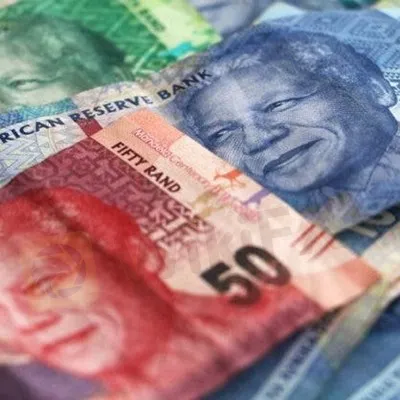
An investigation into JP Markets has revealed how the South African-based online forex broker has apparently been operating in “absolute conflict” with its clients – trading against them and meddling with the trading conditions in a bid to drive down high earners‘ profitability and hike up the firm’s.
This according to papers filed by the Financial Sector Conduct Authority (FSCA) in the South Gauteng High Court on Tuesday.
The FSCA suspended JP Markets financial services provider (FSP) license in June and is now moving to liquidate the company.
In the papers, Kedibone Dikokwe – who heads up the business supervision division at the FSCA – said while the companys core business model involved operating under an FSP licence, it had “structured its dealings in such a manner that it trades with or against its clients, acting as the principal”.
“This means that JP Markets core operating model creates an absolute conflict with each one of its clients. For every loss that a client makes on a transaction, JP Markets makes an equal and corresponding profit”.
The investigation into JP Markets – which is still ongoing – came in response to a barrage of complaints from clients, mainly that the firm had failed to pay out or that they had suffered losses due to interrupted access to the platform.
Described on its website as a “global Forex powerhouse” and “South Africa and Africas largest Forex broker,” JP Markets was in 2016 issued with a category 1 license to – as Dikokwe explained – “provide advice and render intermediary services in respect of derivative instruments and deposits as defined in the Banks Act”.
But during the course of investigations, a different picture of the companys operations emerged.
“JP Markets offered their clients access to a platform to trade in CFDs (contracts for difference). Clients opened accounts and deposited funds into one of the bank accounts in the name of and under the full control of JP Markets. A deposit would then permit the client to trade in forex exchange CFDs to the extent of the deposited funds. Clients would enter transactions and make profits or make losses, as the underlying forex exchange moved up or down,” she said.
“However, the clients were not trading on an online decentralised global financial market; they were merely entering trades on a platform that was no more than an off-the-shelf software application that recorded these trades. In fact, clients were purchasing CFDs issued by JP Markets … JP Markets required an over-the-counter derivative provider licence to conduct these services lawfully.”
The investigations had further revealed a separate so-called “toxic” group – with different trading conditions – had been created for high earners, who were unknowingly moved there.
Pakistani resident Saad Sidat – who managed the platform – blew the lid when he was interviewed by investigators.
“According to Sidat, JP Markets would also get rid of some ‘toxic’ clients by refusing withdrawal requests as some of the clients unexpectedly still profited while trading in the ‘toxic’ group,” Dikokwe said.
When its license was suspended, JP Markets was barred from concluding any new business but, said Dikokwe, the company had not complied.
“The authority considers that the interests of JP Markets clients and members of the public require that the company be liquidated,” she said.
The urgent application is expected to be heard later this month. In the meantime, the FSCA said in a statement this week that JP Marketss bank accounts had been frozen.
JP Markets did not respond to a request for comment yesterday.
Disclaimer:
The views in this article only represent the author's personal views, and do not constitute investment advice on this platform. This platform does not guarantee the accuracy, completeness and timeliness of the information in the article, and will not be liable for any loss caused by the use of or reliance on the information in the article.

Join WikiFX and investors worldwide in celebrating the excitement of the 2026 FIFA World Cup!

Have you experienced issues with Pepperstone deposit & withdrawal processing? From your experience, do you feel that the Australia-based forex broker causes losses to its clients? Did the brokerage entity freeze your account and give you a margin call? All these trading allegations have been rampant on broker review platforms such as WikiFX. This Pepperstone review article takes a close look at the user complaints, especially in 2026. Additionally, we have given an overview of the regulatory framework under which the brokerage entity operates.

Some broker comparisons end with a confident "go with this one." This is not one of them — and that honesty is exactly what makes it worth reading. Wundersys and tradgrip are two young, offshore-registered brokers that keep popping up in front of beginner traders, often through aggressive online marketing. Both promise the usual buffet: tight spreads, generous leverage, multiple account tiers. And both, according to WikiFX, sit near the very bottom of the safety scale. So instead of crowning a champion, this comparison is really about something more useful: learning to read the warning signs, understanding the small differences that still matter, and knowing why "the better of two risky options" is still a conversation about risk.
If you trade forex from India, Pakistan, Bangladesh, Sri Lanka, or Nepal, you already know the quiet truth that eats into every trader's results: it is not just the market that decides whether you profit — it is the cost of getting in and out of each trade. Shave a couple of dollars off your commission on every lot, multiply it across hundreds of trades a year, and you are looking at the difference between a strategy that works and one that bleeds out slowly. South Asian traders are some of the most cost-conscious in the world, and rightly so. So we pulled the data on the brokers most often recommended for the region, cross-checked every name on WikiFX, and ranked them by the one number that matters most here: what they actually charge you to trade. Before the list, one quick lesson that will make this whole ranking click.
 WikiFXWikiFXWikiFXWikiFXWikiFXWikiFXWikiFXWikiFXWikiFXWikiFX
