

Global Broker Regulation Inquiry App
About WikiFX
English
简体中文
繁體中文
English
Pусский
日本語
ภาษาไทย
Tiếng Việt
Bahasa Indonesia
Español
हिन्दी
Filippiiniläinen
Français
Deutsch
Português
Türkçe
한국어
العربية
اردو


EVOSTOCK Review 2026: Is this Forex Broker Legit or a Scam?

WikiFX
|


Abstract:EVOSTOCK is an unregulated offshore brokerage established in 2025 with a critically low WikiFX score of 1.18. Due to zero regulatory oversight and alarming reports of platform manipulation and blocked withdrawals, engaging with this broker carries an extreme risk of financial loss.
Executive Summary (TL;DR): EVOSTOCK is a newly established, entirely unregulated offshore brokerage with a severe lack of transparency. Given a dangerously low WikiFX Score of 1.18 and alarming reports of account manipulation, engaging with this platform carries an extremely high risk of losing your entire investment.
It is completely normal to feel anxious about where to put your hard-earned money. Before you find a Forexbroker to call your long-term trading home, you must dig beneath the shiny website promises. In this comprehensive review, we will break down EVOSTOCKs raw data—explaining exactly what the numbers, the missing details, and a disastrous WikiFX score of 1.18 mean for your wallet.
 Contents
Question 1: Regulation & Safety: Is my money safe?
When it comes to financial safety, the simple verdict on EVOSTOCK is: No, your money is not safe.
Based in Mauritius and officially established in 2025, our database shows that EVOSTOCK operates without any financial regulators overseeing its actions. When we check their formal regulation status, the system returns absolutely nothing—zero licenses from Tier-1 authorities like the FCA (UK) or ASIC (Australia), and not even an offshore license from their home base in Mauritius.
Why does this matter? (Explain Like I'm 5)
Imagine handing your wallet to a complete stranger on the street and trusting them to hold it for you. Operating without regulation means EVOSTOCK suffers from immense “Counterparty Risk.”
Regulated brokers are forced by law to keep your funds in “Segregated Accounts,” meaning your money is locked away from the broker's own operational funds. Because EVOSTOCK is completely unregulated, they can legally pool your money with their own. If the broker goes bankrupt—or decides to pack up and disappear—there is no government safety net, no financial ombudsman to complain to, and your money is simply gone.
Question 2: Are the trading fees and leverage fair?
EVOSTOCK demands anywhere from a $100 minimum deposit (for their “Lite” account) all the way up to an absurd $30,000 for their “Elite” tier account. However, the most critical data point here is their leverage, which maxes out at a staggering 1:500 for their top “Club Trader” account.
Is this fair? It is certainly dangerous.
The Risk of High Leverage
Leverage is essentially borrowed money from the broker to magnify your trade sizes. A 1:500 leverage means that for every $1 you have, you can control $500 in the market. While this sounds like a great way to get rich quick, it is actually a double-edged sword. At 1:500, even a microscopic market fluctuation in the wrong direction can instantly trigger a “margin call,” completely wiping out your $100 or $2,000 deposit in a matter of seconds. High leverage is exactly how unethical brokers deliberately exhaust your funds.
Question 3: What are real traders complaining about?
Unfortunately, the real-world experiences tied to EVOSTOCK align perfectly with the red flags of an unregulated broker.
Our database flagged a severe complaint from a victim in Uruguay (October 2025). The trader reported a classic scam cycle:
The broker encourages an initial deposit and lets the trader win a few small, profitable trades to “sweeten” the deal and build trust. However, the trap snaps shut the moment the trader attempts a withdrawal. The broker forces the trader to make unnecessary market movements. Suddenly, over a weekend, the platform is manipulated, the account balance plummets to 0, and the broker simply blames “the market.”
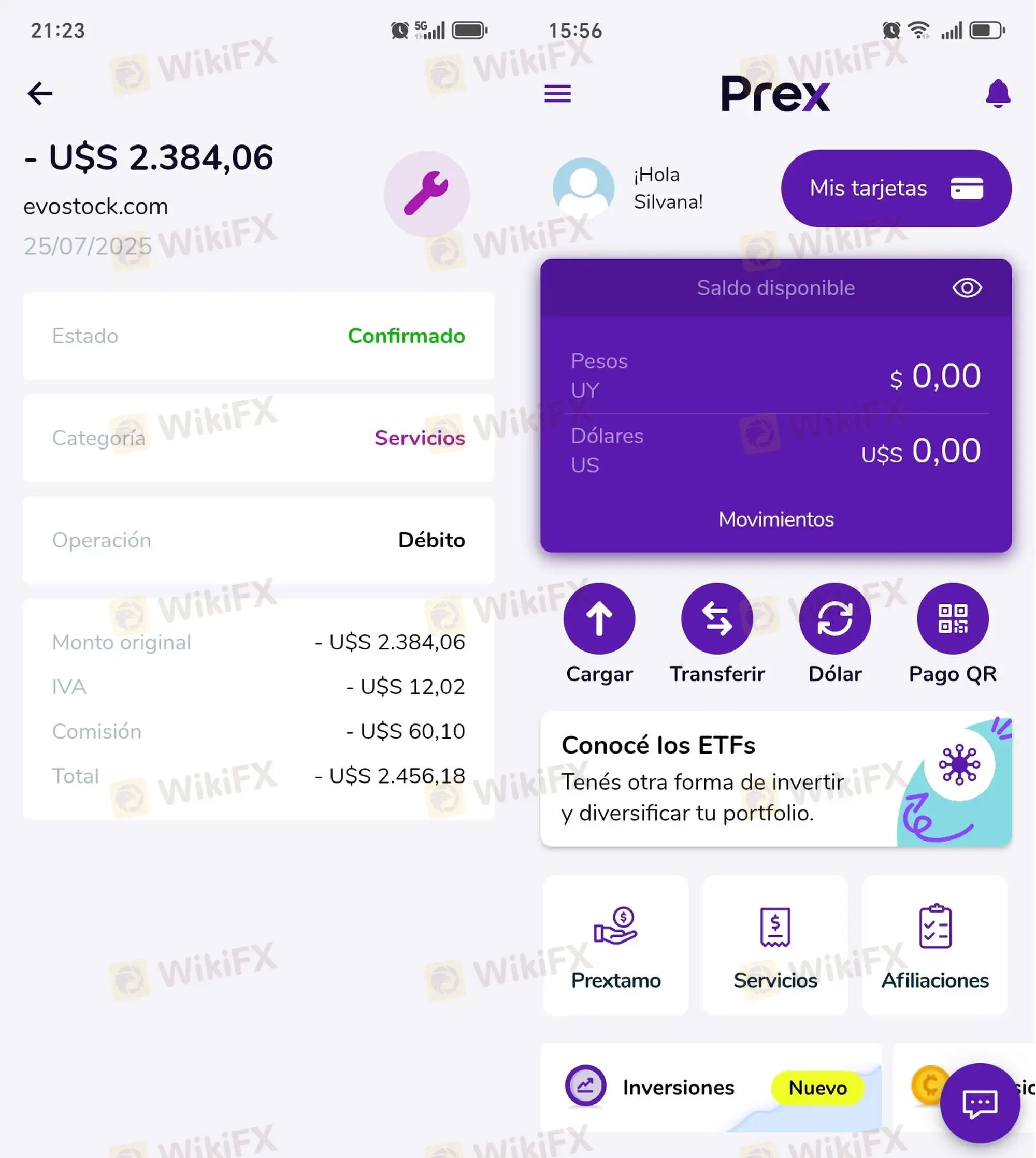
Pro Tip for Traders: Scammers love to give you fake early “wins” to build your confidence so that you will deposit even larger sums. If a broker blocks your withdrawal or demands further hidden fees to release your funds, stop depositing immediately.
Question 4: What software will I use?
Interestingly, EVOSTOCK does not officially list standard, reputable trading platforms like MetaTrader 4 (MT4) or MetaTrader 5 (MT5) in their software database.
When a standard platform is missing, an offshore broker is likely pushing you toward their own proprietary web or mobile app. You must be heavily warned about this: proprietary software built by unregulated entities poses a massive risk of “back-end price manipulation.” This is where the broker controls the price feeds on your screen, entirely separate from the real global market, to ensure you eventually lose.
Furthermore, always ensure you are on the official site before entering your login details to avoid phishing scams. Scammers frequently clone websites, and a fake login portal can steal your credentials, passwords, and banking info in a single click.
Final Verdict: Should I open an account?
To put it plainly: Absolutely not.
EVOSTOCK brings together a perfect storm of red flags: they are a brand-new unregulated entity, they offer desperately high 1:500 leverage to wipe out your accounts, they operate hidden platform setups, and they already have concrete reports of freezing withdrawals and artificially shrinking accounts to zero.
Trading is risky enough without worrying if your broker will steal your deposit. Status changes daily. Before depositing a single dime into any brokerage, check the WikiFX App for the latest real-time certificates, regulatory updates, and verified user complaints. Protect yourself first!

Disclaimer:
The views in this article only represent the author's personal views, and do not constitute investment advice on this platform. This platform does not guarantee the accuracy, completeness and timeliness of the information in the article, and will not be liable for any loss caused by the use of or reliance on the information in the article.
WikiFX Broker
Latest News
Singapore tightens monetary policy in surprise move as rising oil prices rekindle inflation risk
WikiFXSPREDIX MARKETS Review: What Traders Should Know Before Depositing
WikiFXBXB Review – Zero Regulation, Dead Website: What Traders Need to Know
WikiFXHFM Review: No Regulatory Licences and a 1.83 Score , Is Your Deposit Safe?
WikiFXIs Your Withdrawal Plan Killing Your Compounding Gains?
WikiFXHFMARKETS TRADE Review: Zero Regulation and a Central Bank Warning
WikiFXWhy the Dollar Moves Almost Every Forex Pair
WikiFXChipmakers fall in US and Asia as AI jitters rattle investors
WikiFXBX Trade Review: Is This Unregulated Broker Worth the Risk?
WikiFXSTMARKET Review: Withdrawal Complaints Cloud a Low-Rated Broker, What to Know Before You Deposit
WikiFX